
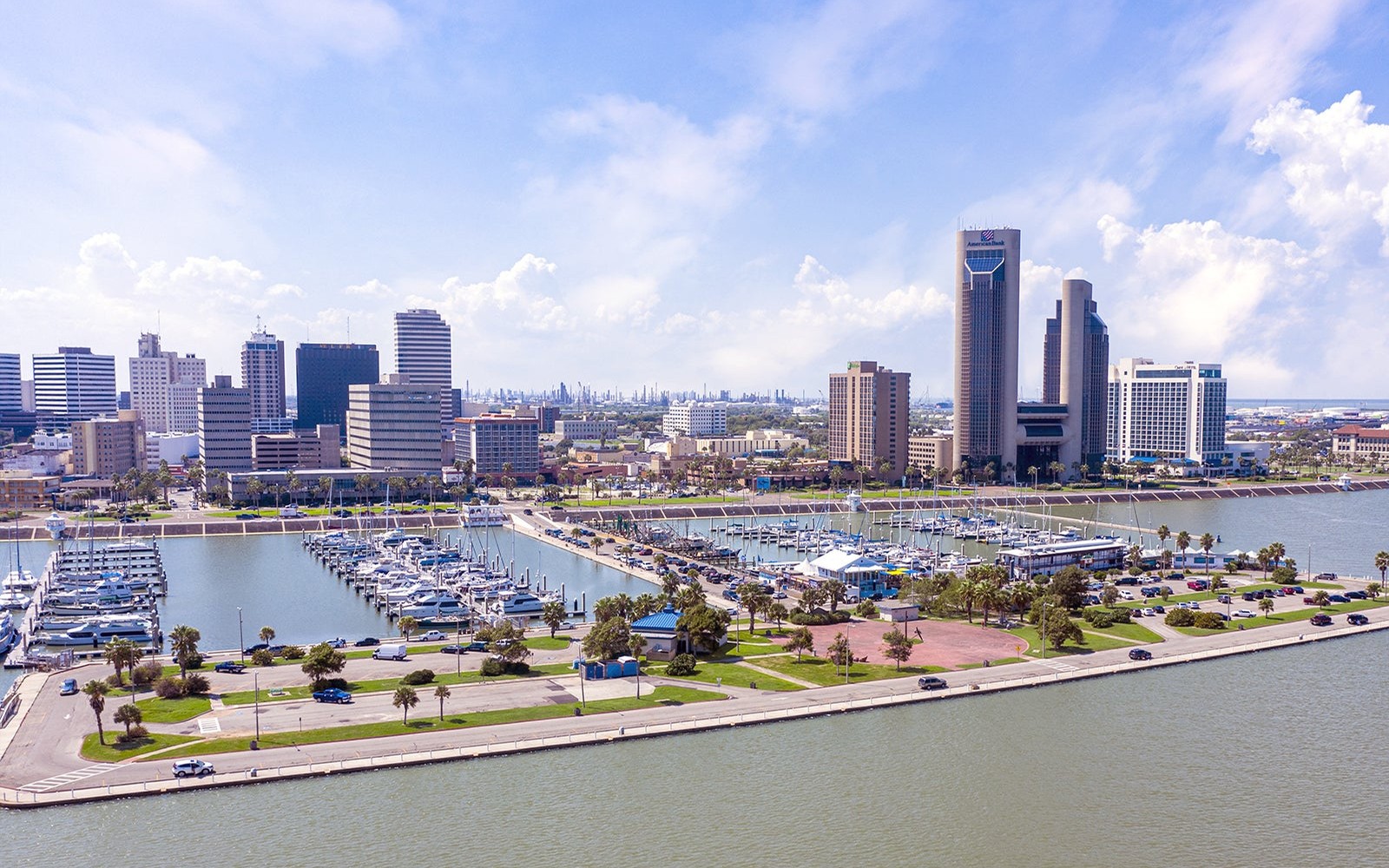
Corpus Christi is one of the fastest-moving industrial construction markets on the Texas Gulf Coast, and the concrete demand that comes with port expansion, petrochemical facility work, and refinery maintenance pours is not the kind you want to serve with drum trucks chasing a slump clock. Batch on site and you control the yield. Every yard you produce at the pour location is a yard you are not paying a plant to route, schedule, and minimum-load. That spread is where the margin lives in Gulf Coast industrial concrete work.
Contractors financing a volumetric concrete mixer truck here gain access to a project type that the conventional ready-mix model handles poorly: industrial pours on restricted-access facilities, marine terminal work, and petrochemical plant pads where delivery windows are narrow and slump tolerance is tight. We finance those moves starting at $50,000, with the typical deal falling between $100,000 and $200,000 for a fully configured unit.
Corpus Christi's Construction Drivers and the Mobile-Mix Opportunity
The Port of Corpus Christi is the largest crude oil export port in the United States, and the industrial construction activity tied to that status is constant. Terminal expansions, pipeline connections, and tank farm concrete work move year-round. LNG export facility buildout on the La Quinta Channel added years of heavy concrete demand to an already active market. Operators who can deliver precise mixes on restricted-access facilities with no minimum-load waste have a real competitive advantage here.
Nueces County residential growth along the Southside corridor and the Calallen area adds a parallel market. Subdivisions, commercial pads, and school facility work generate volume that residential concrete contractors can capture more profitably with a volumetric unit than with drum truck deliveries from in-town plants. You arrive with your own material, you batch what the slab needs, and you do not leave a partial yard spinning in a drum.
The industrial and commercial concrete contractors doing heavier work around the ship channel typically find that a high-output unit earns faster payback. Pour days on industrial pads run large, and a machine that can batch 60 or more yards per hour keeps a crew moving without waiting on drum deliveries.
Unit Selection for Gulf Coast Industrial Work
The environment in Corpus Christi is specific. Salt air accelerates corrosion on any equipment that spends time near the ship channel, and volumetric mixers are no exception. When evaluating a used unit for Gulf Coast work, corrosion history on the aggregate bin, conveyor structure, and cement system is as important as hours. A unit with good maintenance documentation from an inland operation may come south and need additional protection work before it is Gulf-ready.
For industrial-scale pours, a high-output volumetric mixer capable of 60 to 100 yards per hour is the right tool. Downsizing to save on the purchase price often costs more in pour-day inefficiency than the payment differential would have. We help you run that math before committing to a unit.
Specialty mixes also matter here. Petrochemical facilities and marine structures often spec fiber-reinforced or high-strength concrete. A fiber-reinforced concrete mixer with programmable admixture dosing lets you hit those specs at the pour site without pre-ordering specialty loads from a plant. That capability commands a premium on industrial bids.
Financing Terms and Structures
For single-unit purchases under roughly $400,000, we move on an application and three months of bank statements. No tax returns required on the short-form path. Approvals take a few days; funding follows in one to two weeks. For larger fleet additions or multi-unit transactions, we go deeper into financials, but the single-truck first-unit purchase is kept simple by design.
An equipment loan is the most common structure: fixed monthly payments, title in your name from day one, and you build equity with every payment. An equipment lease is worth considering if you want lower monthly exposure in the early months or prefer to preserve capital for materials and crew costs. We can structure either and show you the difference on real numbers.
B and C credit files are not automatically declined. Operating history, cash flow, and the value of the equipment all factor into underwriting alongside the credit score. Contractors who have had a rough patch but have clear revenue and solid bank balances often close with us when conventional lenders pass.
Contractors Positioned to Win Gulf Coast Industrial Bids
The contractors who get the most from owning a volumetric unit in this market are those already doing bid work for industrial and port-adjacent clients who have concrete specifications that ready-mix plants cannot meet reliably. If a general contractor or EPC firm keeps seeing your bid and asking whether you own your own batch capability, the answer to that question is often the difference between winning the subcontract and watching someone else take it.
Bridge and infrastructure contractors working on TxDOT coastal projects, causeway maintenance, and Nueces Bay crossings deal with marine environment concrete requirements that favor tightly controlled on-site batching. A metered concrete mixer with precise water-to-cement ratio control gives those operators the documentation they need to meet DOT mix design requirements on every pour.
Septic and utility contractors working across Nueces County's growth areas also benefit, particularly those doing concrete encasement, manholes, and utility structures on sprawling residential and commercial developments where plant deliveries are inefficient and partial loads are the norm rather than the exception.
Apply for Corpus Christi Mixer Financing
Send us your application and three months of statements. We respond with real terms, real numbers, and a clear path forward. Industrial-market timing matters, and we do not slow you down.