
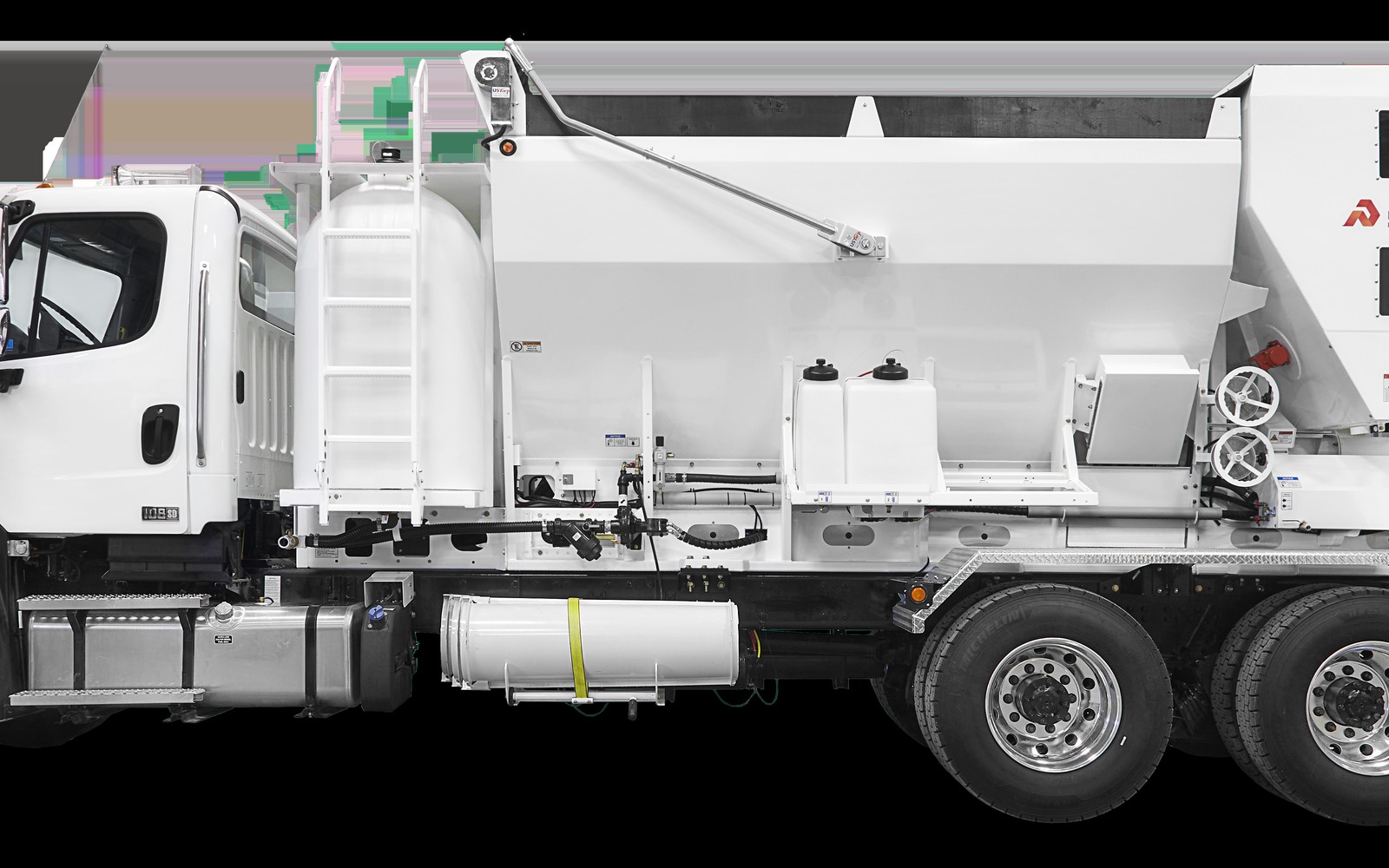
Commercial concrete contracts are won on price and delivered on spec compliance. A volumetric mixer gives a commercial contractor a tool that helps on both fronts: the ability to supply mix at a lower cost than purchasing from a plant, and the flexibility to hit exact specifications at the pour without needing the plant's cooperation for a mid-job adjustment. That combination matters on jobs where different zones of the slab require different mix designs, or where a GC's inspector is watching slump on every truck load.
Commercial concrete work spans tilt-up construction, parking decks, industrial floors, warehouse slabs, and flatwork across retail and office projects. Each has distinct spec requirements. A volumetric concrete mixer truck lets the crew adjust air content, water-to-cement ratio, and admixture dosing at the meter without returning to the plant. That real-time control reduces pour disputes and batch rejections that cost time and money on commercial jobs.
We finance volumetric mixers for commercial concrete contractors from single-unit purchases to fleet additions. Our minimum is $50,000, and the range for a production commercial unit typically runs $100,000 to $150,000 and above. We work with B/C credit situations and established operations alike, and funding typically completes in one to two weeks from a full application.
The Commercial Job Case for On-Site Batching
Commercial pours demand tight spec control. Mix design submittals go through the engineer of record, and field adjustments without documentation create liability exposure. Volumetric metering systems generate printed batch tickets that show exactly what was batched on each load, giving the contractor a defensible paper trail and the owner's inspector verifiable data. That documentation capability is one underappreciated advantage of volumetric mixing on commercial projects.
Commercial flatwork contractors also face pour-sequence scheduling pressure. A large slab placed in sections requires consistent mix design across multiple trucks over hours. Volumetric batching from a single metered system produces inherently consistent results from the first load to the last, without the batch-to-batch variability that can occur when multiple drum trucks are loaded from the same plant over a long pour window.
Specialty commercial applications, including industrial floors with hardener topping or fiber-reinforced concrete for warehouse slabs subject to forklift traffic, are efficiently served by volumetric equipment. Adding steel or synthetic fiber at the meter on each load ensures uniform distribution without the segregation risk of adding fiber at the plant and hauling it across town.
Financing a Commercial-Grade Volumetric Unit
Commercial concrete contractors are often mid-sized businesses with several employees, established customer relationships, and two to five years or more of operating history. That profile positions them well for standard equipment financing through an equipment loan or equipment lease.
An equipment loan provides immediate ownership, fixed payments, and the ability to take Section 179 or bonus depreciation in the purchase year. A lease preserves working capital during a growth phase and can reduce the monthly payment obligation compared to a loan on the same asset. We present both options with real payment illustrations so you can see the cash flow difference before you decide.
For commercial operators who have financed equipment before, application-only financing up to approximately $400,000 is available, requiring bank statements and the purchase documentation without a full tax return package. Larger transactions or those with more complex credit profiles move through a conventional underwriting process, but we work to keep that timeline tight.
If you already own a volumetric unit and want to free up capital for a project opportunity or a second truck, a Sale-Leaseback on the owned asset is worth a conversation. You sell the truck to the lender, continue using it on your jobs, and receive cash at closing that you can deploy however the business needs.
Production Capability: Matching the Unit to Commercial Volume
Commercial concrete work puts higher production demands on a volumetric unit than residential work does. A crew waiting on concrete on a commercial pour day loses money fast, so the unit needs to batch at a rate that keeps ahead of placement. That typically means choosing a large volumetric mixer in the ten- to twelve-yard range for batch-supply applications, or a mid-size unit that complements other trucks on a large pour.
Chassis selection matters for commercial work too. Commercial jobsites often have weight-restricted site access routes, requiring a tri-axle or tandem-axle configuration to meet legal load limits while carrying full payload. A tandem-axle volumetric mixer is a common choice for commercial contractors who move frequently between urban sites with bridge restrictions and suburban sites with fewer constraints.
Electronic metering systems on modern volumetric units from manufacturers like volumetric mixer manufacturer financing and ProAll provide printed batch tickets, real-time slump adjustment, and data logging that commercial project documentation requirements demand. These systems add value beyond convenience on a commercial job where mix design compliance is a contract deliverable.
Refinancing and Sale-Leaseback for Commercial Contractors
Commercial concrete contractors who have owned their volumetric unit for a few years and paid the balance down significantly have an option that many overlook: equipment refinancing to lower the monthly payment or pull cash out. If your truck has appreciated or held value and your loan balance is materially below the market price, a refinance can improve your monthly cash position or generate capital.
For contractors who own their unit free and clear, a cash-out refinance converts that equity to working capital. You keep the truck in service, and the cash can go toward material supply, crew expansion, or a bid bond on a larger contract. The payment restarts on the truck, but you have capital in hand to go after bigger work.
Frequently Asked Questions
Common questions from commercial concrete contractors exploring volumetric financing.
Finance Your Commercial Volumetric Unit
Get started today. Commercial concrete contractors typically complete the financing review in one to two weeks. Compare equipment loan options or reach out directly to discuss a Sale-Leaseback on an existing unit. We work fast because your next bid does not wait.