
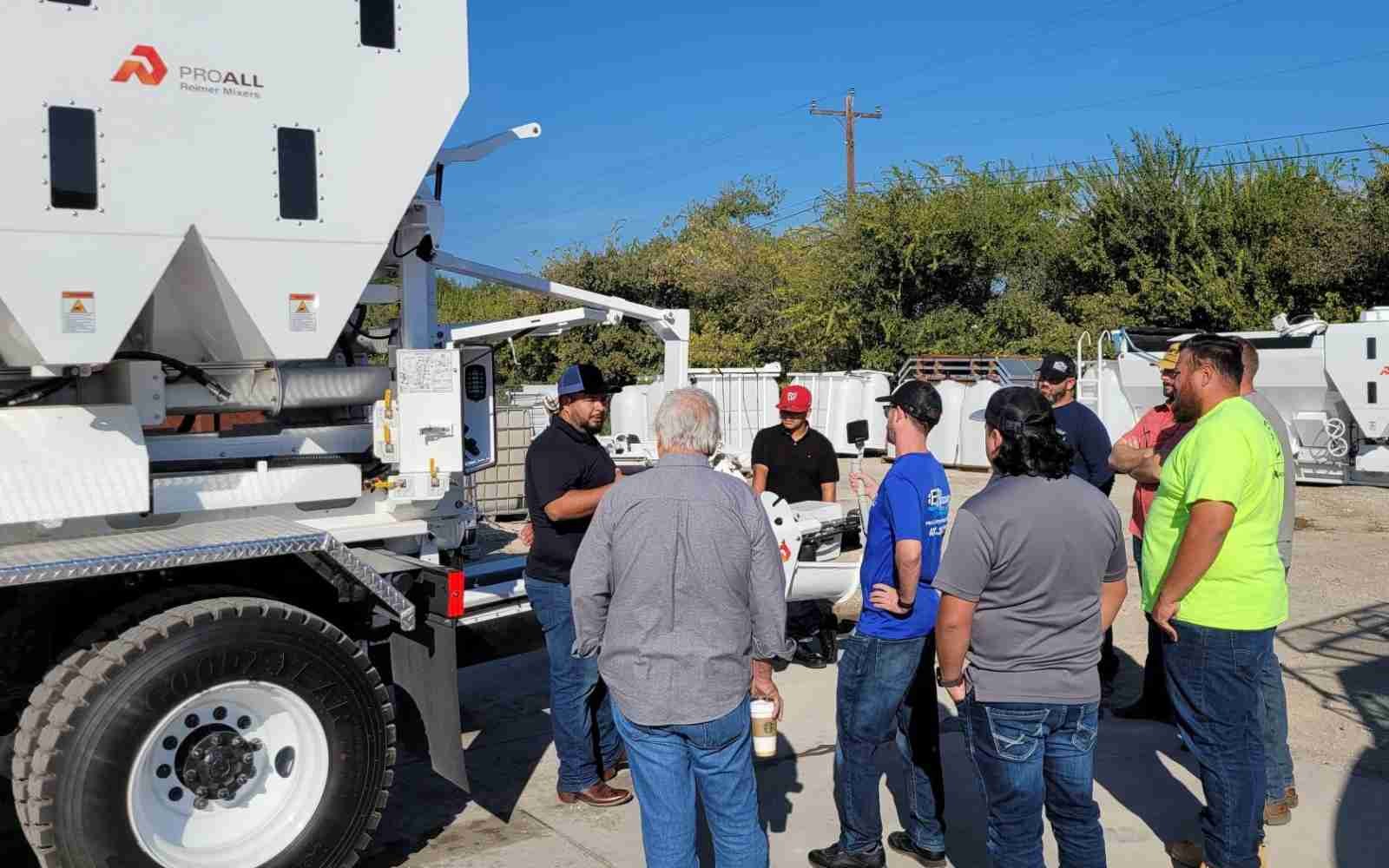
Mixing on site is a margin play, and a lease keeps more cash in your pocket during the months the new unit is still proving itself on the jobs. Monthly payments on a lease are typically lower than on a comparable loan because you are not amortizing the full purchase price, just the portion you use over the lease term. For operators who want to put a volumetric concrete mixer truck to work without tying up capital in a large down payment or carrying a heavy monthly debt service, a lease is a serious option worth running the numbers on.
We structure leases for both new and used volumetric mixers, with terms that generally run 24 to 60 months. Two main lease types apply here: a fair market value (FMV) lease and a $1 buyout lease. The choice between them shapes the payment, the end-of-term decision, and how the transaction sits on your balance sheet. We work with mobile concrete businesses of all sizes to find the structure that fits the business model, not just the machine.
Lease Payments vs. Loan Payments: The Real Comparison
The lower monthly payment on a lease is not magic; it reflects the fact that you are financing a portion of the asset's value rather than all of it. On a 48-month FMV lease, for example, the lender estimates what the mixer will be worth at lease end and builds that residual into the structure. You pay for the depreciation during your term, and the residual is not included in your monthly cost.
That structure works well when:
- Cash flow is tighter in the early months of a new route or a new machine
- You want the flexibility to upgrade at the end of the term without a private-party sale
- You prefer predictable, lower payments over the satisfaction of building equity
A $1 buyout lease looks and feels almost identical to a loan. Payments are higher than an FMV lease because there is no meaningful residual. At the end you pay one dollar and the title transfers. Many operators choose the $1 buyout because they know they want to own the machine but prefer the accounting treatment a lease provides. For a full comparison, see our FMV vs. $1 Buyout Lease breakdown.
Compared to a straight equipment loan, a lease generally saves on the monthly line item but costs more in total interest over the life of the deal if you purchase at the end. Run both scenarios before committing.
Which Mixers Qualify for a Lease
Most volumetric concrete mixers financed through our programs qualify for lease structures. That includes truck-mounted units, trailer-mounted rigs, and combination units from established manufacturers. A trailer-mounted volumetric mixer on a separate chassis qualifies the same as a truck-mounted unit, though the underwriting may consider the truck chassis and the volumetric body separately depending on whether they are titled together.
Used equipment qualifies for leases too, though the lender will think carefully about residual value on an older machine. A unit that is five or more years old and already has high hours may not support the residual structure that makes an FMV lease work. In those cases, a $1 buyout lease (which functions like a loan) or a straight loan may be a cleaner fit. Our used equipment financing page covers the options most relevant to older units.
Key qualifiers:
- Minimum transaction $50,000
- New or used equipment from recognized manufacturers
- Business entity with a verifiable operating history (or startup programs for new operators)
- B/C credit considered alongside A-paper
Leasing New vs. Used Volumetric Equipment
A new mixer off the factory floor carries a clear residual value and a full warranty, both of which lenders appreciate when structuring a lease. Units from brands like Holcombe Mixers or Zimmerman Industries have trackable dealer prices and a functioning resale market, which makes residual estimation straightforward. A new unit also means you start with no deferred maintenance, no mystery service history, and a machine that is typically covered under the manufacturer's warranty for at least the first year or two of the lease.
Used equipment leases are viable but require more scrutiny on the collateral side. A well-documented used mixer with current service records, reasonable hours, and a clean inspection can qualify for a lease with good terms. The trade-off is that the residual value is harder to project accurately on a machine that is already several years into its life, so FMV lease structures become less attractive and $1 buyout structures become more common.
For operators serving rural and remote jobsite contractors who need a machine that can handle rough terrain and long drives, a used unit in excellent mechanical condition is often the right call regardless of how it is financed.
Why Operators in Active Markets Choose to Lease
In markets where concrete demand is growing fast and the mix of job types is changing, some operators prefer the flexibility a lease provides at term end. Take a market like Phoenix, AZ, where residential, commercial, and infrastructure builds are all happening simultaneously. An operator who leases a 10-yard unit today has the option to step into a larger or more specialized machine at lease end without the friction of selling the current unit privately.
The flip side is that in stable, predictable markets where you know you will run the same machine for a decade, ownership makes more economic sense. The lease decision is really a question of how confident you are about the next five years of your business and whether the machine you are buying today is the machine you will want to be running five years from now.
Who Gets the Most Value From a Volumetric Mixer Lease
Leasing is not the right structure for everyone, but for certain operator profiles it is the smarter move. Here is where it consistently wins:
Operators Who Upgrade Equipment Regularly
A contractor who replaces their main mixer every four to five years to stay current with technology and capacity is essentially renting the depreciation on each machine. Leasing makes that cycle explicit and lower-cost in the early years. At lease end, returning the machine and stepping into a newer high-output volumetric mixer is a cleaner transaction than selling the old unit privately and buying new.
Businesses Protecting Cash Flow
Keeping the monthly obligation lower in the first two to three years of a new machine gives the operator margin to absorb unexpected costs, slow months, or a customer loss without financial stress. A lease's lower payment is not just a financing preference; for a growing operation it can be the difference between absorbing a rough quarter and defaulting on an obligation.
Contractors Testing a New Market
Moving into a new geography, a new mix design, or a new customer type introduces uncertainty. An operator testing a market like Reno, NV or a new customer segment such as shotcrete and gunite contractors might prefer the lease's flexibility over the commitment of full ownership until the market proves itself. The lease keeps the exit available if the market does not develop as expected.
Get a Lease Quote for Your Mixer
Tell us what you are looking at and we will model both FMV and $1 buyout scenarios side by side. Application takes a few minutes, decisions come back fast, and funding generally lands within one to two weeks.