
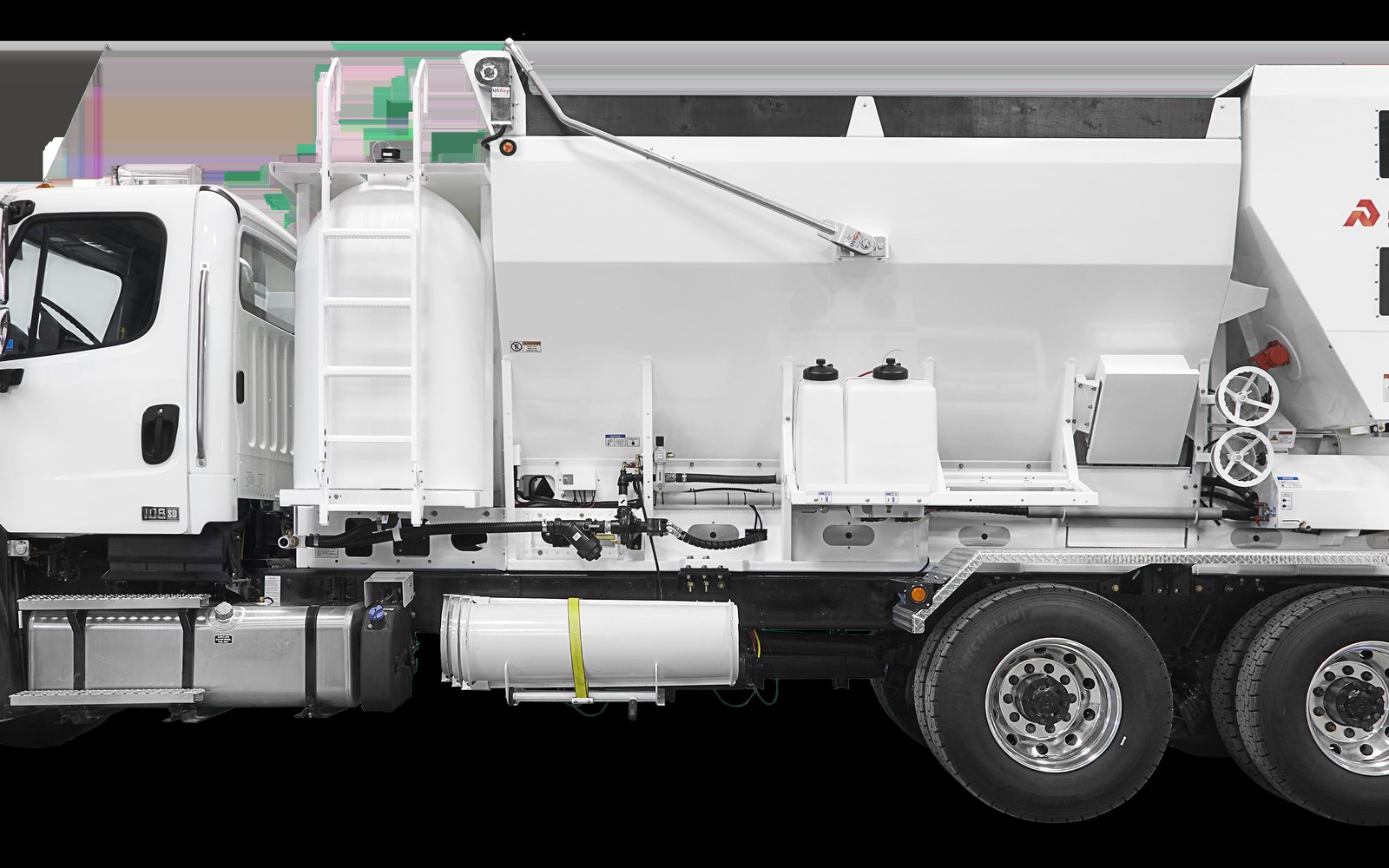
Pulling a trailer onto a jobsite and producing fresh concrete the moment you need it changes the economics of small and mid-size pours. A trailer-mounted volumetric mixer gives you the same on-site yield advantage as a full mixer truck at a lower capital entry point, and because the mixing unit sits on a trailer rather than a dedicated chassis, your existing tow vehicle does the hauling. The margin story is the same: every yard you batch on site is a yard you did not buy from a plant, and the spread between your cost and your invoice is what builds the business.
Financing a trailer unit follows the same path as financing any volumetric equipment. We fund both new and used trailer-mounted mixers starting at $50,000, with straightforward application-only approval available up to roughly $400,000. Funding typically takes about one to two weeks from a complete application. Operators with B or C credit are considered alongside borrowers with stronger profiles.
Trailer Configuration and What It Solves
A trailer-mounted volumetric mixer shares the core batching architecture with its truck-mounted cousins. Aggregate rides in calibrated bins, cement is stored in a pressurized silo or hopper, water is in an onboard tank, and admixtures have their own metered compartments. The auger-based mixing chamber blends ingredients as the pour runs. What changes is the chassis arrangement.
Because the mixing plant is on a trailer, you are not committed to a single truck platform. You can tow the unit with a pickup, a flatbed, or a semi depending on the trailer's gross vehicle weight and the job's access requirements. Some small volumetric mixer trailer configurations are rated for 1.5 to 3 cubic yards per mix cycle, making them practical for residential flatwork, pool decks, and fence post pours. Larger trailer platforms can match output rates of smaller truck-mounted units.
Operators who already own or lease a tow vehicle find that the trailer approach reduces total fleet investment. Rather than buying a complete truck-mounted unit, they add the mixing capability to an existing equipment line. This is especially useful for pool and hardscape contractors who pour in small volumes across many residential addresses.
Who Buys Trailer Volumetric Mixers
Trailer-mounted volumetric mixers attract a different buyer profile than truck-mounted units in several ways.
Concrete contractors entering the mobile-batching market often start with a trailer because the equipment cost is lower and the tow vehicle can serve double duty on the rest of the operation. For a residential concrete contractor who already runs a capable one-ton pickup, a trailer-mounted mixer can add a self-batching capability without a second vehicle purchase.
Landscape and hardscape operations batch small volumes of colored or specialty mixes on residential sites where a full truck would be oversized and difficult to maneuver. Trailer units thread through gates and down side yards where a truck cannot go.
Agricultural and rural operators who pour footings, grain-bin bases, and barn pads on remote land find that a trailer-mounted mixer eliminates the plant scheduling problem entirely. The ingredients travel on the trailer; the mix happens at the pour.
If your work sends you to locations without a convenient ready-mix supplier, or if short-load minimums from the plant are cutting into your margins, a trailer volumetric mixer is worth the conversation. Compare it to a skid-mounted volumetric mixer if site permanence matters more than mobility.
Documentation and Credit Requirements
Trailer-mounted volumetric mixers qualify for the same financing structures as truck-mounted equipment. The credit review covers your business history, personal credit score, and the machine's value relative to the loan amount.
- Application. A one-page credit application starts the process for requests up to approximately $400,000.
- Bank statements. Three months of business bank statements show revenue consistency and cash flow coverage of the payment.
- Equipment invoice or listing. Make, model, year, condition, and price for the unit you are acquiring.
B and C credit applicants are considered. Lenders in our network understand that construction business credit scores often reflect the cyclical nature of the industry rather than actual credit management practices. If you have a strong cash flow story in the bank statements, that carries weight even when the credit score has taken hits.
Operators interested in application-only financing for deals up to $400,000 will find the process especially streamlined. No tax returns, no full financials, just the application and the bank statements.
Refinancing a Trailer Mixer You Already Own
If you own a trailer-mounted volumetric mixer outright and want to free up capital for other growth, a Sale-Leaseback lets you sell the asset to a lender and lease it back for continued use. The machine stays on your jobs. The cash goes into your operating account. This structure works well for contractors who bought equipment with cash and now want that capital working in other parts of the business.
Refinancing an existing loan on a trailer mixer is also possible if you are looking for a lower rate or a longer term to reduce the monthly payment. We need the current payoff amount and the machine's details to evaluate the equity position. If the trailer's current market value exceeds your payoff, a cash-out refinance can produce additional working capital at the same time.
Finance Your Trailer Volumetric Mixer
Apply now and let us match your trailer mixer financing to the right lender. B/C credit is fine. New and used equipment qualifies. Funding typically arrives in one to two weeks. Start with a one-page application.