
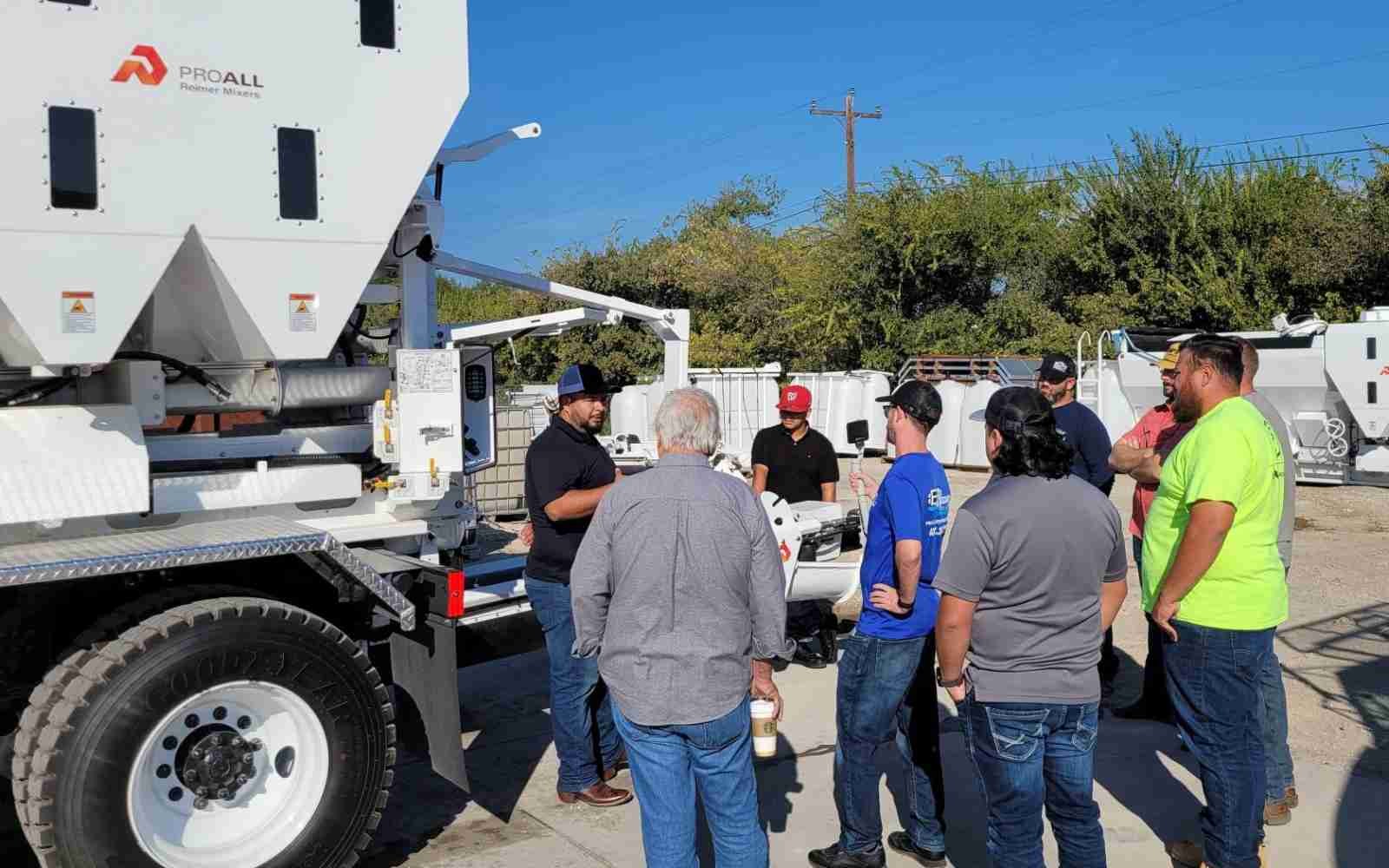
You have been paying down the loan and the machine has held its value. That gap between what you owe and what the mixer is worth is equity, and a cash-out refinance converts it to spendable capital without giving up the title or the machine. The new loan pays off the existing balance, and the difference comes to you in a wire transfer. The mixer keeps running on the same jobs; the cash goes where your business needs it most.
This structure works for operators who have built real equity in a good machine and have a specific use for that capital: a second mixer, materials for a large job, a cash reserve heading into a slow season, or anything else that requires a lump sum your operating income cannot produce quickly enough. We work with concrete contractors and municipal and public works operators who have earned that equity and want to deploy it intelligently.
How the Cash-Out Refinance Structure Works
The transaction is a refinance with a loan amount that exceeds the existing payoff balance. The sequence:
- You apply and disclose the current loan balance and the machine's identifying information
- We establish current market value for the machine
- We determine how much we can lend against that value (loan-to-value ratios apply)
- The new loan pays off the existing balance; the excess is your cash-out
- You begin payments on the new loan at the new rate and term
The loan-to-value (LTV) constraint is the key variable. If a lender is willing to lend up to 90 percent of a machine's current value and that machine is worth $150,000, the maximum loan is $135,000. If you owe $80,000 on the existing loan, up to $55,000 could come to you as cash (minus any transaction costs). LTVs vary by lender, machine age, and credit profile.
For a high-output volumetric mixer with strong resale value and a borrower with solid payment history, the LTV constraints are generous. For older machines or thinner credit profiles, the math gets tighter, and in some cases a Sale-Leaseback may generate more cash than a cash-out refinance can deliver within the LTV limits.
The Best Candidates for a Cash-Out Refinance
The ideal cash-out refinance situation: a machine that is three to six years old, in good working condition, with a current loan balance that is 50 percent or less of the machine's current market value. That spread gives the lender room to work and gives you a meaningful cash-out amount. Here is who typically fits that profile:
Growing Operators Adding Equipment
A second mixer means more simultaneous jobs and more margin per day. Rather than waiting to save the down payment or stretching to buy a second machine outright, extracting equity from the first machine can fund the acquisition. A 10-yard volumetric mixer that is paid down by 60 percent is a meaningful down payment on a second unit.
Contractors Mobilizing for a Large Project
Big projects require big mobilization: materials pre-purchased, crews lined up, insurance increased, bonds posted. None of that waits for the job to pay out. A cash-out refinance on the machine that will execute the job provides the capital to mobilize without diluting ownership or taking on unrelated debt. Bridge and infrastructure contractors often face exactly this timing gap.
Operators Heading Into a Slow Season
Having three or four months of fixed-cost coverage in the bank changes how you manage a slow season. Instead of cutting back or deferring maintenance, you operate normally and the cash reserve handles the variance. This is especially relevant for operators in northern markets where Fargo, ND or Billings, MT winters compress the pour season.
Documentation and Credit Requirements
A cash-out refinance requires a bit more underwriting than a straight rate-and-term refinance because the lender is increasing their exposure. The additional documentation compared to a standard refinance is modest but real:
- Current loan payoff statement
- Use of proceeds (what you are doing with the cash is relevant to some lenders)
- 3 months of business bank statements
- Basic application with business financials if the transaction is large
- Machine inspection or photos if the unit is older or heavily used
B and C credit profiles are considered, but the LTV constraint tightens as credit quality decreases. A stronger credit profile gets a higher LTV; a thinner profile gets a more conservative one. If your credit has improved since the original loan, that works directly in your favor on a cash-out refinance. If you are earlier in your credit-building journey, our B/C credit equipment financing page covers what is realistically available at your tier.
What a Cash-Out Refinance Costs
You will pay a higher rate than a straight refinance in most cases, because a higher LTV carries more lender risk. There may also be origination fees. The real cost comparison is between the cash-out refinance and whatever alternative you would use for the capital: an unsecured working capital loan (typically higher rate), a line of credit (if available), or not having the capital at all and missing the opportunity. Against those alternatives, a cash-out refi on a strong asset can be the cheapest capital available to a concrete business.
You are also taking on a higher loan balance than you had before, which means a higher monthly payment unless you extend the term significantly. Model the new monthly payment against what your business can sustain at different revenue levels before committing to the structure. For operators looking at the relationship between debt and equipment ownership more broadly, our working capital vs. equipment loan comparison is a useful reference.
What Machines Support the Best Cash-Out Terms
Not all volumetric mixers are created equal from a cash-out refinance standpoint. The machines that support the strongest equity extraction are those with a combination of recognized brand, documented service history, reasonable hours, and a proven secondary market. A five-year-old unit from volumetric mixer manufacturer financing with documented oil changes, hydraulic service, and a recent auger rebuild is a fundamentally different collateral story than an unknown-brand unit with no paperwork.
Configuration matters too. A fully-equipped 8-yard volumetric mixer with water tank, aggregate bins, and a modern control system is more liquid in the secondary market than a stripped or modified unit that does not appeal to the broadest pool of buyers. Lenders know what buyers in the market will pay for specific configurations, and that market knowledge directly informs the LTV they are willing to extend on a cash-out.
Operators who have added volumetric mixer attachments or upgraded the control system to a newer digital system have in some cases increased the machine's value beyond the original purchase price, which can improve the available cash-out amount. Document those upgrades with invoices and photos. The collateral is only worth what the lender can verify, and verified upgrades change the math.
Find Out How Much Cash Your Mixer Can Unlock
Give us the current loan balance and the machine details and we will model what a cash-out refinance looks like for your specific situation. Fast turnaround, no pressure, and we do this for operators across every credit profile.