
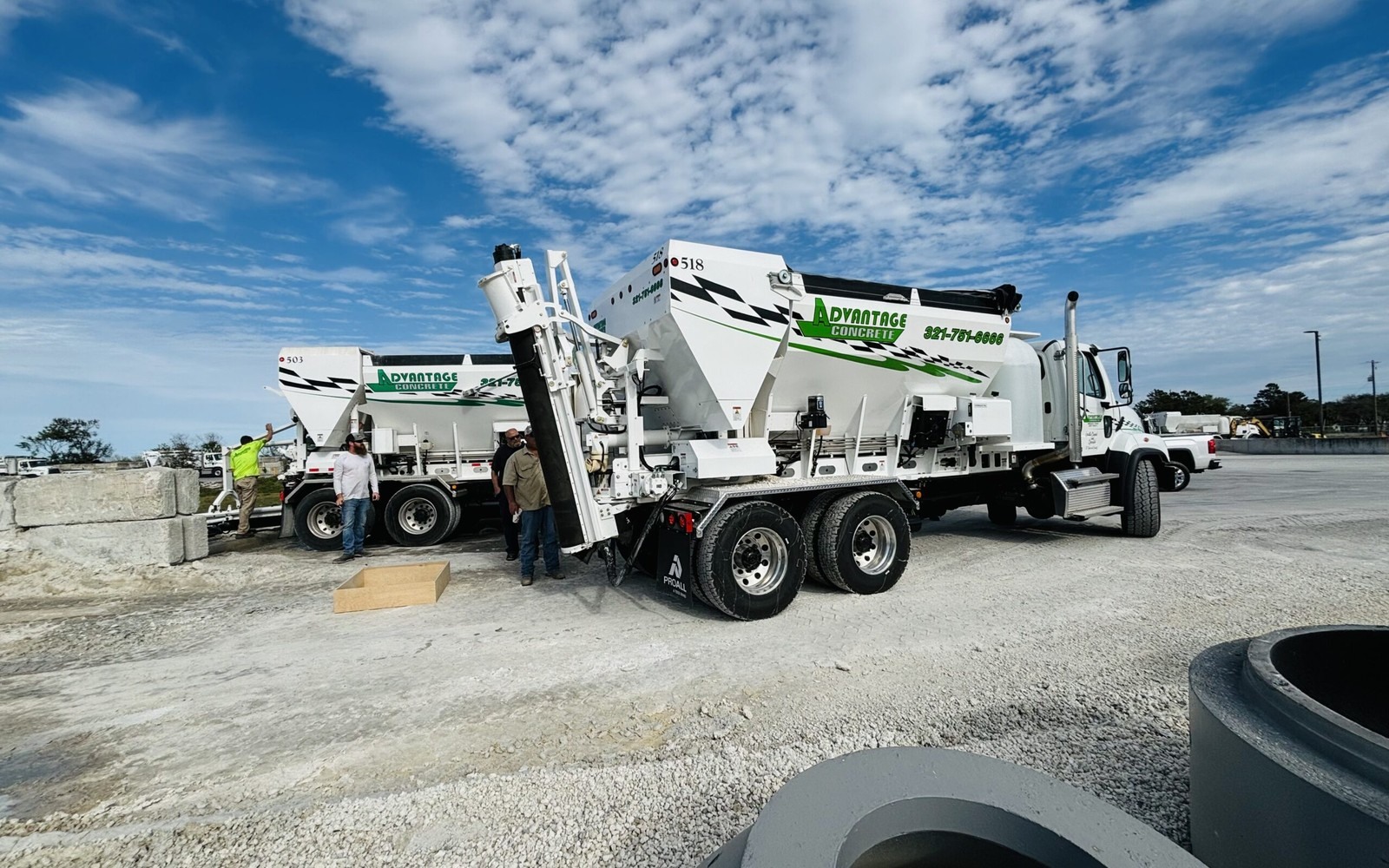
A mixer you own free and clear is equity sitting on four wheels. A sale-leaseback converts that equity into cash without interrupting the machine's workday. The structure is straightforward: we purchase your mixer at an agreed value, and you lease it back from us under a defined term. You walk away from the closing with a check and a lease that lets you keep operating the same machine on the same jobs. The on-site yield keeps coming; the cash is in your account.
This is not a niche transaction for operators in trouble. It is a capital tool used by businesses that have deliberately built equity in their equipment and now want to put that equity to work somewhere else, whether that is a second mixer, hiring a crew, buying out a competitor, or simply smoothing out a cash flow crunch before a big job. We work with ready-mix concrete suppliers and independent contractors who want to grow without waiting for revenue to accumulate slowly. The sale-leaseback is how you use what you already own to fund what comes next.
The Sale-Leaseback Transaction Step by Step
The mechanics are cleaner than the name suggests. Here is the sequence:
- You apply and provide information about the machine (year, manufacturer, model, hours, condition)
- We establish a value based on current market data and equipment inspection
- We present a purchase offer and lease terms simultaneously
- You sign both the sale agreement and the lease agreement at closing
- Funds wire to your account, typically within seven to fourteen business days of approval
- You continue operating the machine under the new lease
At the end of the lease term, you typically have options: purchase the machine at the agreed residual (or at fair market value depending on lease type), renew the lease, or return the equipment. Most operators using this structure for a machine they rely on choose to repurchase.
The amount you receive depends on what we determine the machine is worth in the current market and what percentage of that value the deal is structured at. A well-maintained truck-mounted volumetric mixer from a recognized manufacturer landing between $100k and $200k is a strong candidate for a sale-leaseback that puts substantial capital in your hands.
Who Uses a Volumetric Mixer Sale-Leaseback
The typical candidate is an operator who has owned their machine long enough to pay it down significantly or off entirely, has a specific capital need, and does not want to sell the machine outright because the machine is their income. That profile shows up across a range of situations:
Expanding Fleet
You own one mixer and you have jobs for two. Rather than waiting to accumulate the down payment for a second unit, you extract equity from the first machine to fund the purchase of the second. Both machines are now earning instead of one machine earning while equity sits idle. For operators adding a tandem-axle volumetric mixer to serve larger pours, this is a direct path to growth.
Capital Investment
Materials, insurance, labor, and overhead all demand cash before jobs pay out. A sale-leaseback on a paid-off unit fronts that capital without requiring a separate working capital loan or line of credit. Oilfield and energy construction operators often use this structure when mobilizing for a large project that requires significant upfront expenditure.
Business Purchase or Partnership Buyout
Sometimes the capital need is structural, not operational. A sale-leaseback generates cash that can fund an ownership transition, a partner buyout, or the purchase of another business entity. The mixer continues its job while the capital does something separate.
How We Value the Mixer for a Sale-Leaseback
The transaction value is the foundation of how much cash you receive. We look at comparable sales data for the specific make and model, the machine's current hours, its physical condition, and any documentation of recent maintenance or rebuilds. A machine with a documented service history and a recent inspection almost always commands a higher valuation than a comparable unit without that paper trail.
Manufacturers that hold value well in the volumetric segment include volumetric mixer manufacturer financing, ProAll, and Holcombe Mixers. Units from these builders have active secondary markets, which makes residual estimation cleaner and generally results in better terms for the seller.
Used mixers are welcome in sale-leaseback transactions. The key is that the machine has enough value relative to the lease structure to make the deal work for both sides. A very old machine with high hours and no recent service documentation may not generate enough value to make the transaction meaningful. A machine that is five to ten years old with reasonable hours and maintained records is a strong candidate.
Comparing Sale-Leaseback to Other Capital Options
If you need cash from an existing machine but want to keep ownership, compare the sale-leaseback to a cash-out refinance. A cash-out refinance also extracts equity but leaves you as the owner and on title. The sale-leaseback typically puts more cash in hand because the lender is buying the whole asset, not just lending against a portion of its value. The trade-off is that you are no longer the legal owner during the lease term.
A sale-leaseback also differs from a standard equipment refinancing in that refinancing works when there is an existing loan to replace, while a sale-leaseback is best suited for machines that are already paid off or nearly so. Both are legitimate tools; the right one depends on where you are in the machine's ownership arc.
The Geography of Sale-Leaseback Opportunities
Sale-leasebacks on volumetric mixers happen most often when operators in growing markets have accumulated equity in their machines but face a capital gap to pursue the next opportunity. Markets where construction activity has surged over the past several years have produced a generation of concrete operators who now own machines with substantial equity, often because they purchased used units at low prices and ran them hard through a strong demand period.
Operators in markets like Greenville, SC and Bozeman, MT, where construction has expanded significantly, often find themselves in this position: the machine is proven, the market is still active, and the equity in the unit is real. A sale-leaseback allows them to capitalize on that equity position without interrupting operations. The machine stays on the job; the capital goes to work on the next growth move.
For operators serving mining and aggregate operations where mobilization capital is critical and jobs can be large, extracting equity from existing equipment to fund project mobilization is a well-established practice. The sale-leaseback on a concrete mixer is the same logic applied to a smaller, more common asset class.
Find Out What Your Mixer Could Put in Your Account
Tell us the year, manufacturer, model, and hours on your machine. We will put a valuation together and show you what a sale-leaseback would look like in your specific situation. No obligation, and the conversation is confidential.