
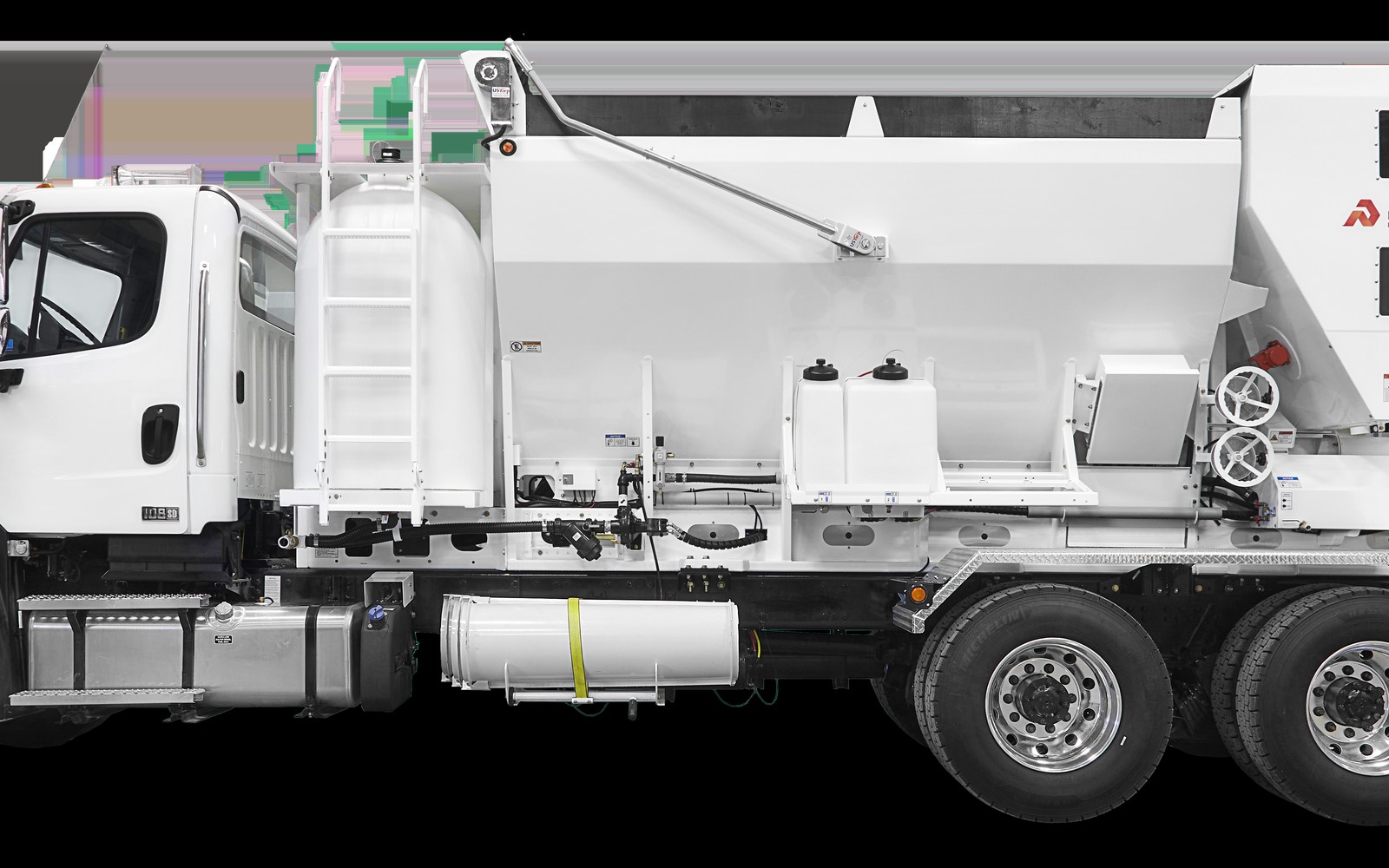
Well pads, compressor stations, tank battery foundations, pipeline river crossings, substation bases, and wind turbine anchors all require concrete. And all of them tend to be in places where the nearest batch plant is an hour away, the road is a caliche lease road, and the project schedule does not have room for a drum truck to arrive stiff. Oilfield and energy construction contractors who own their concrete supply are not just saving money on short-load fees, they are removing a hard constraint from a schedule that already has enough constraints.
A volumetric mixer in an energy construction fleet is a force-multiplier. It shows up on a remote pad site, batches whatever the piling caps or equipment foundation needs, and moves to the next location the same day. No plant scheduling, no cold-weather concrete delivery windows, no partial-load returns. The crew controls concrete supply the same way they control every other part of the build, and that matters enormously on remote energy sites where every third-party dependency is a schedule risk.
We finance volumetric mixers for oilfield and energy contractors. Our minimum is $50,000. Production units for oilfield work typically run $100,000 to $150,000 and above. We work with B/C credit, new and used equipment, and contractors buying through private sales. Funding typically completes in about one to two weeks from a full application package.
Energy Sector Contractors Who Use Volumetric Concrete
Oilfield civils are the most direct users. Well pad grading and concrete work, tank battery foundations, separator bases, compressor building slabs, and sales line support structures all generate concrete scope on every pad job. A contractor who holds multiple pad construction contracts in an active basin runs concrete continuously and benefits immediately from having the supply on the truck.
Midstream contractors handling pipeline installation have similar needs. Road crossings, valve site pads, metering station foundations, and pipeline river-crossing concrete anchor weights are all small-to-medium pours spread across a long corridor. A volumetric unit that follows the pipeline crew and batches at each structure is a far more efficient approach than ordering individual plant deliveries at each station mile along the right-of-way.
Renewable energy contractors are a growing segment. Wind turbine base pours are the headline, but the supporting infrastructure, operations building slabs, turbine pad electrical conduit trench backfill, meteorological tower foundations, and transmission line structure bases, generates substantial concrete work that is always in remote locations. These contractors in states like Texas, Kansas, and the Dakotas face exactly the same plant-access problem that oilfield contractors do, often more acutely. Contractors in markets like Williston, ND or Midland, TX know that plant access is a competitive variable, not a given.
Oilfield-Capable Volumetric Configurations
Oilfield jobsites impose conditions on equipment that suburban construction does not. Lease roads, caliche surfaces, grade crossings, and mud lots are daily realities. A volumetric mixer going into oilfield service should be on a chassis with adequate ground clearance and suspension for unimproved access roads, and ideally configured with aggregate bins and cement silos that can be loaded at a supply point rather than requiring constant trips back to a plant.
A volumetric mixer cement silo trailer pulled alongside the production unit allows a contractor to keep a large cement reserve on site without returning to a plant for refills. On remote pad sites where the crew might be placing concrete across multiple days, that on-site storage capability is essential. The mixer stays on the pad, the silo stays positioned, and the crew works without interruption.
For compressor stations and substation work where concrete is placed in tight spaces with conduit, rebar, and grounding grid already installed, a mobile concrete pump-and-mixer combo reaches into formwork that a chute cannot access. The pump delivers the concrete to exactly where the crew needs it without improvised chute extensions and without losing slump on a long extension.
Financing for Energy-Sector Construction Contractors
Oilfield and energy construction companies experience revenue cycles that follow basin activity. During active drilling phases, revenue is strong. During price corrections or permit delays, revenue can compress significantly. That pattern is familiar to lenders who specialize in this sector, and we work with exactly those lender relationships.
An equipment loan gives you ownership and depreciation. For a company in an active basin with strong current revenue, capturing a large depreciation deduction in the current year is often the most valuable tax planning move available. An equipment lease preserves cash for the contract mobilization costs that oilfield civils routinely carry: security deposits, fuel pre-purchase, consumables, and crew mobilization to a remote pad site.
We also consider B/C credit equipment financing for energy contractors. Oilfield credit profiles often carry marks from a price correction cycle: a slow year that stretched accounts payable, a deferred equipment loan that got modified during the downturn. Lenders familiar with the basin know those marks for what they are. We match your application to the right lender, not the wrong one.
Getting Your Mixer Financed on Oilfield Timing
Basin activity moves fast. A contractor who wins a pad construction contract on a Monday needs equipment on the ground before the drilling rig finishes surface casing. Waiting six weeks for a bank's equipment loan committee is not an option in a business where the rig schedule is the master calendar.
We process most volumetric mixer applications in one to two weeks from a complete package. Application-only financing up to approximately $400,000 requires bank statements and the purchase quote, which are documents an active contractor has immediately available. We tell you what the deal looks like quickly rather than holding you in a process while the contract window closes.
For contractors buying a used unit from another operator exiting the market, our private-party purchase financing program moves just as quickly. We pay the seller, you get the truck and title, and you are on the pad when the schedule says concrete needs to happen.
Frequently Asked Questions
Questions oilfield and energy contractors ask us most often before applying.
Keep Your Pad Schedule With In-House Concrete Supply
Apply today. Oilfield and energy contractor applications typically review in one to two weeks. Explore loan options or check out how remote jobsite contractors are using volumetric mixing to eliminate supply dependencies on challenging terrain. Basin timing does not wait, and neither does our financing process.