
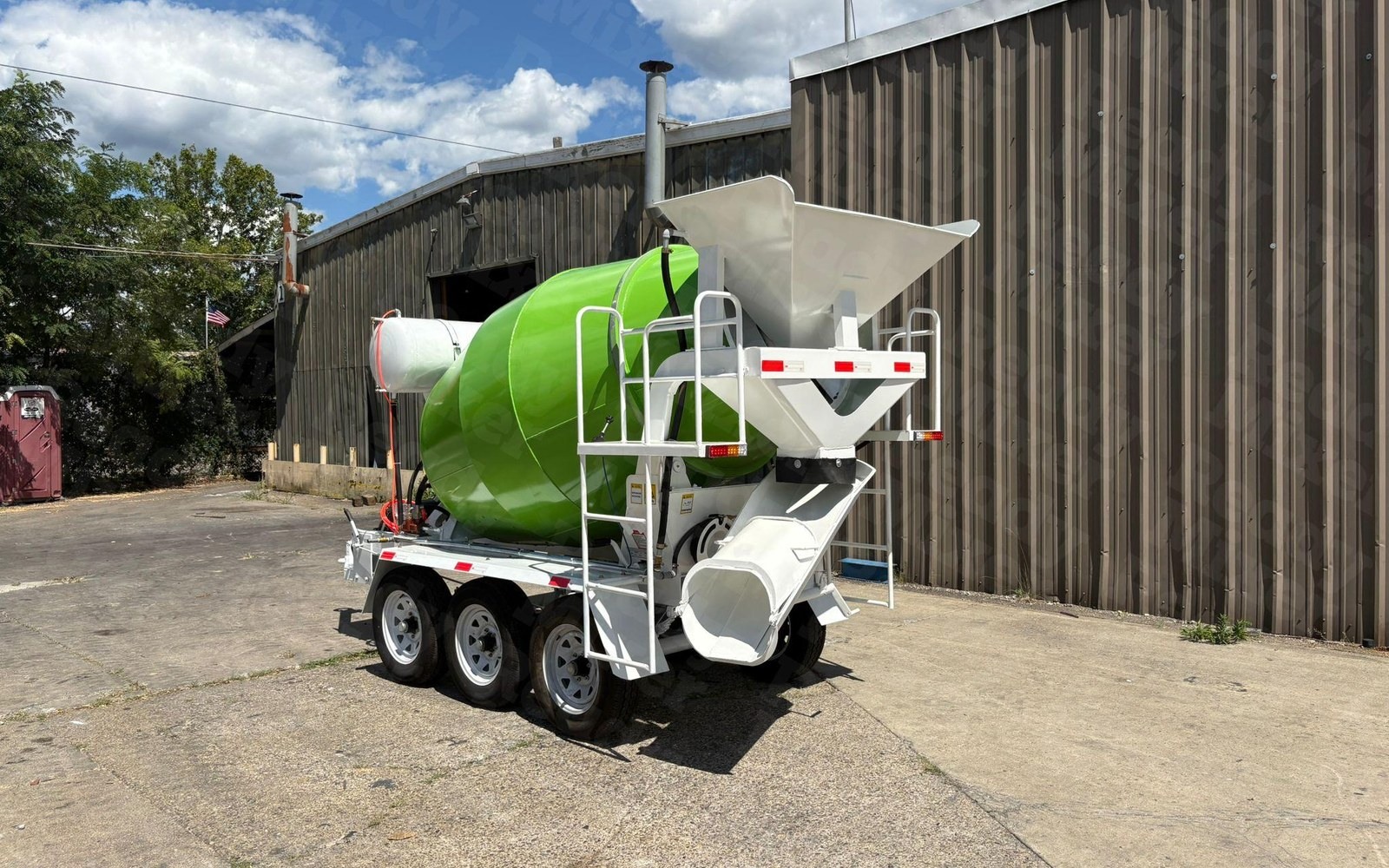
The cement silo trailer is what turns a volumetric mixer into an all-day production machine. Standard volumetric trucks carry a finite cement payload, and on high-volume pours, that payload runs out before the job does. A volumetric mixer cement silo trailer extends cement capacity by staging additional bulk cement beside the mixer, feeding it continuously as the truck depletes its onboard supply. You batch longer runs without stopping for plant refills. That throughput advantage is the whole investment case.
We finance cement silo trailers as standalone equipment or as part of a combined mixer-and-trailer package. Minimum deal size is $50,000. A cement silo trailer by itself typically prices between $60,000 and $120,000 depending on capacity and pneumatic transfer system. A combined mixer-and-trailer package can range from $200,000 to $350,000. We work with new and used equipment, B/C credit is welcome, and most deals fund in one to two weeks.
How the Silo Trailer System Works
A cement silo trailer is a bulk cement storage vessel mounted on a road-legal trailer chassis with a pneumatic transfer system. When the volumetric mixer's cement compartment runs low, the operator activates the pneumatic transfer, which moves dry cement from the silo trailer into the mixer's cement bin, typically in a few minutes. The mixer then continues batching without returning to the plant for a reload.
Silo trailer capacities range widely. Smaller units carry 20 to 30 tons of cement, enough to support a full day's production for a medium-output volumetric unit on a large pour. Larger units can carry 50 tons or more and are designed for multi-day extended project deployments where the mixer operates continuously at a remote site without plant access.
The pneumatic transfer system requires an air compressor and appropriate duct connections between the trailer and the mixer. Most production combinations use dedicated transfer connections that minimize cement loss and dust. Operating a silo trailer requires attention to cement moisture content: silo-stored cement exposed to humidity can bridge or set in the vessel, so adequate ventilation and aeration paddles are standard features on quality units.
Operators who use cement silo trailers often pair them with a large volumetric mixer or a high-output volumetric mixer, since the throughput advantage of extended cement supply only pays off when the mixer itself can produce at scale. For smaller output units, the investment calculus shifts toward multiple reloads versus a trailer that may take too long to deploy and connect.
Operators Who Need Extended Cement Capacity
Large-pour concrete contractors are the primary market. A 300-yard slab pour, a major foundation, or a roadway paving run that stretches through the entire working day requires more cement than any standard volumetric truck can carry. Without a silo trailer, the operator loses production time reloading at a plant or trucking cement in separate deliveries. With a silo trailer parked beside the mixer, the production run is continuous.
Rural and remote jobsite contractors represent another important segment. When the nearest ready-mix plant or bulk cement supplier is an hour or more away, the cost of reload trips is severe. A silo trailer at the remote site, loaded from a bulk cement tanker that makes one scheduled delivery, supplies the mixer for an entire construction cycle. This model is common in oil-field construction, rural subdivision development, and agricultural concrete work in areas with limited plant coverage.
Oilfield and energy construction contractors use silo trailer setups for pad construction, secondary containment walls, and equipment foundations in remote basins where plant access is not guaranteed. The ability to deploy a self-sufficient concrete production system to a remote location and operate it for days without resupply is a premium capability that commands premium pricing on those jobs.
Financing a Silo Trailer
A silo trailer financed as standalone equipment is treated as a separate collateral item with its own loan. If you are buying a silo trailer to pair with a mixer you already own, we finance the trailer on its own. If you are buying mixer and trailer together as a production system, we can structure the package as a single loan with both assets as collateral.
Terms for silo trailers typically run 48 to 60 months. These units have long useful lives and hold value reasonably well because the cement transfer and storage systems age at a different rate than mobile equipment. A well-maintained silo trailer can serve for 15 years or more, so the loan term represents a fraction of the asset's useful life.
For operators who want to manage cash flow around the seasonality of large-pour concrete work, an equipment lease on the silo trailer may offer advantages over a loan. Lease payments are operational expenses rather than capital expenses, and the structure can include options to upgrade the silo capacity at end of term if your production volume grows. A TRAC lease is worth considering for trailer equipment specifically, because TRAC leases allow the lessee to set the residual value and take the upside if the trailer is worth more than the terminal value at end of term.
Questions About Silo Trailer Financing
Here are the common questions we get from operators considering a cement silo trailer purchase.
Finance Your Cement Silo Trailer
If you are running large pours and losing production time on reload trips, a silo trailer is the fix. If you are working in a remote location without plant access, it is the system that makes the job possible. We finance both situations. Tell us about the unit you are looking at, your current mixer setup, and the types of pours you are winning. We will put together a real term sheet on a real timeline. Operators in Midland and other remote markets are exactly the profile we built this program around.