
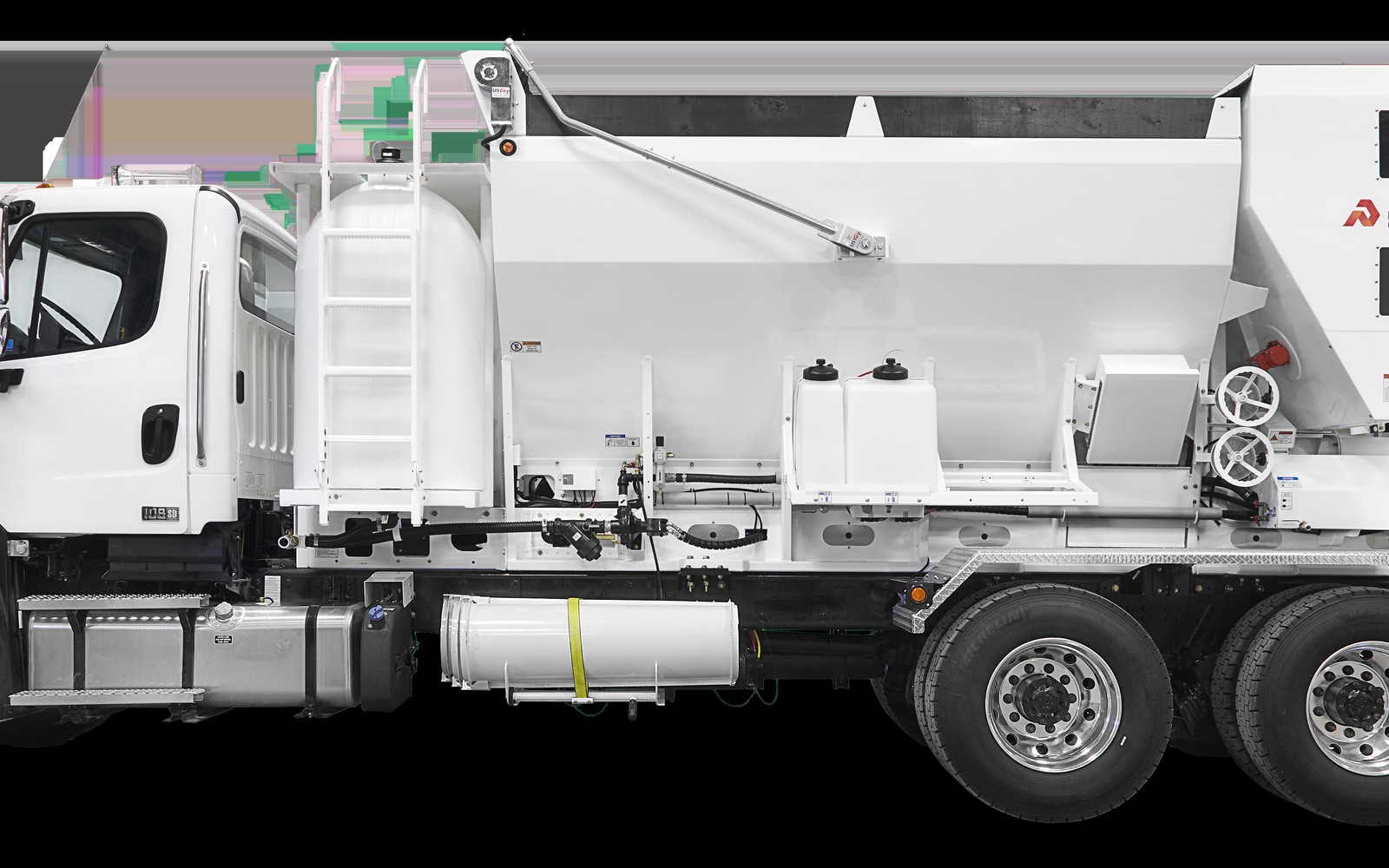
A Terminal Rental Adjustment Clause lease, known as a TRAC lease, is a financing structure specifically designed for over-the-road vehicles and equipment that travel public roads. Volumetric concrete mixer trucks fall squarely in this category. The TRAC structure offers lease-like payments that are lower than a standard loan, plus a defined mechanism at lease end that is more predictable than a typical FMV lease. For operators who run their mixer on a truck chassis that operates on public highways, the TRAC lease is worth understanding alongside the other financing options available for this equipment.
The core mechanic: at the start of the lease, you and the lender agree on a residual value the vehicle is expected to have at the end of the term. If the vehicle sells for more than that residual, you receive the difference. If it sells for less, you cover the shortfall. This 'adjustment clause' is what makes the TRAC structure unique. It transfers some residual risk to you compared to a true FMV lease, but it also gives you some upside if the machine holds its value better than expected. Mobile concrete businesses operating truck-mounted units on state and federal roads are the primary audience for this structure.
The TRAC Lease Mechanics in Detail
The TRAC structure relies on three numbers: the equipment cost, the agreed residual value, and the monthly rental payment. Here is how they connect:
- Equipment cost minus the residual value equals the amount being financed through the lease payments
- You pay for the depreciation that occurs during the lease term, not the full purchase price
- At lease end, the vehicle is sold (or appraised for purchase). If the sale price exceeds the residual, you get a credit. If it falls short, you pay the difference.
This structure is treated favorably under tax law for commercial vehicles that travel public roads. The IRS has specific guidance (Revenue Procedure 2001-28 and related rulings) on TRAC leases that gives them status as true leases for tax purposes, allowing the lessee to deduct the rental payments as operating expenses rather than treating the transaction as a purchase for tax accounting.
For a diesel volumetric mixer mounted on a truck chassis that crosses state lines and uses public highway systems, the TRAC structure is one of the most common institutional financing tools. It is less common for trailer-mounted or stationary volumetric units that do not operate as motor vehicles on public roads, where standard equipment leases and loans apply more cleanly.
TRAC Leases and Volumetric Mixer Residual Values
The residual value agreement at the heart of a TRAC lease is a bet on how well the machine will hold its value. Well-maintained units from recognized manufacturers tend to support higher residuals, which reduces the monthly payment since you are financing a smaller depreciation gap. A lender who knows the volumetric concrete mixer market well can set a realistic residual that works for both sides.
Manufacturers with strong resale markets include volumetric mixer manufacturer financing, ProAll, and Holcombe Mixers. Their used units trade regularly in the secondary market, which means dealers and auction houses provide real transaction data for residual estimation. When the residual is grounded in real market data rather than optimistic projections, the adjustment at the end of the term tends to be smaller in either direction.
The risk in a TRAC lease is that if the machine depreciates faster than the agreed residual, you pay the shortfall at term end. Operators who keep their machines in excellent condition, maintain service records, and plan to operate in markets where used volumetric equipment is in active demand have the best protection against this downside.
Comparing TRAC Lease Payments to Other Structures
Monthly payments on a TRAC lease are generally lower than a standard equipment loan on the same machine because you are not financing the full purchase price. Compared to an FMV lease, the TRAC structure may offer slightly higher or lower payments depending on how the residual is set. The key difference is in what happens at the end:
- Standard equipment loan: You own the machine at payoff, no end-of-term decision needed
- FMV lease: You pay what the market says the machine is worth at end of term to purchase, or return it
- TRAC lease: The residual is set in advance; you receive or pay the difference between the agreed residual and the actual sale price
- $1 buyout lease: Fixed $1 purchase option; effectively a loan in lease clothing
For a full side-by-side on lease structures, our FMV vs. $1 Buyout Lease page covers those two structures directly. For operators deciding between TRAC and a straight equipment loan, the monthly payment savings of the TRAC structure need to be weighed against the residual risk at term end and the complexity of the end-of-lease process.
Who Benefits From a TRAC Lease on a Volumetric Mixer
The TRAC structure makes the most sense for operators who:
- Run a truck-mounted mixer on public roads as a commercial motor vehicle
- Want lower monthly payments than a loan provides
- Understand and accept some residual value risk at term end
- Plan to keep the machine well-maintained, which protects against large residual shortfalls
- Prefer lease accounting treatment for the payments
Operators who plan to run the machine hard for ten years and want the simplest possible ownership structure are usually better served by a straight equipment loan. TRAC leases are most valuable for operators with a defined upgrade cycle or those for whom the monthly payment difference is a meaningful business cash flow consideration. Road and highway construction operators who upgrade equipment regularly are often good TRAC lease candidates because the defined term and residual structure aligns with their fleet planning cycle. Operators in active markets like Dallas, TX or Phoenix, AZ can reasonably expect strong residual values on well-maintained units given sustained equipment demand in those markets.
Qualifying for a TRAC Lease on Volumetric Equipment
TRAC leases are available across a range of credit profiles, though the documentation requirements and rate structure will reflect the borrower's credit history. The core qualification criteria parallel standard equipment lease underwriting: credit application, business bank statements, and vehicle documentation. What makes a TRAC application specific to commercial vehicles is the additional documentation around the truck chassis itself.
Most volumetric mixer truck setups involve a two-component structure: a commercial truck chassis (Peterbilt, Kenworth, Mack, or similar) and the volumetric concrete mixer body mounted on it. Both components may be titled separately or together depending on how the unit was built and registered. Lenders structuring a TRAC lease need to understand the full unit, not just the mixer body, because the truck chassis is what qualifies the unit as an over-the-road motor vehicle for TRAC purposes.
Operators running units in markets like Midland, TX or Bakersfield, CA where oilfield and energy construction drives significant concrete demand often have routes and customer bases that support the commercial vehicle classification clearly. A mixer truck that logs real highway miles serving multiple job sites has a profile that TRAC lenders understand. For oilfield and energy construction operators in particular, the TRAC lease is worth examining because the over-the-road nature of the work aligns directly with how the structure is designed. For operators exploring all options, equipment loans and standard equipment leases are also available and worth modeling side by side against the TRAC structure.
Get a TRAC Lease Quote for Your Mixer Truck
If you operate a truck-mounted volumetric mixer on public roads, a TRAC lease is worth modeling alongside a loan and a standard lease. Give us the machine details and we will show you what the payment and end-of-term structure look like under each option.