
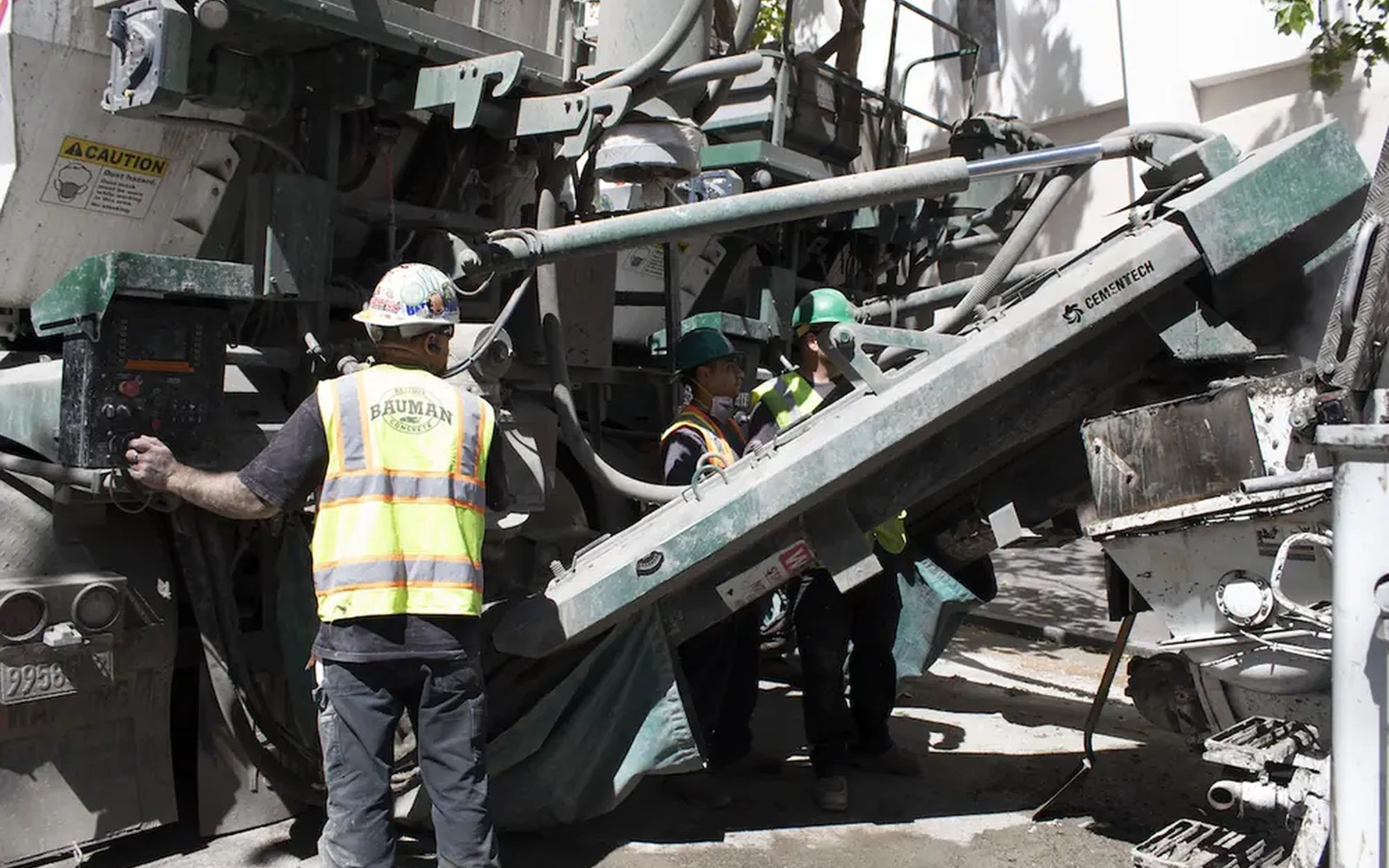
Municipal concrete work does not happen on the contractor's schedule, it happens on the city's schedule, the inspector's schedule, and the traffic control permit window's schedule. A concrete supply failure on a public works job does not just delay the contractor, it delays a road reopening, a permit closure, or a project milestone that the city has already communicated to the public. The contractors who win and retain municipal concrete contracts are the ones who can guarantee concrete shows up on time, in spec, with batch documentation, and in exactly the quantity needed. Volumetric mixing delivers all four.
A on-site concrete mixer on a public works job eliminates the batch plant dependency that has caused more municipal concrete disputes than probably any other single factor. Batch tickets from the volumetric meter document every parameter the inspector needs to verify. No phone calls to the plant to confirm the load weight. No questions about whether the water was added in transit. The truck batched it in front of the crew and the batch ticket proves it.
We finance volumetric mixers for public works contractors. Our minimum is $50,000. Production units for municipal work typically run $100,000 to $150,000 and above. We work with established public works companies and newer municipal contractors alike, including B/C credit situations. Funding typically completes in one to two weeks from a full application.
Why Municipal Contractors Are Moving to Volumetric
Municipal concrete work is a volume game. Cities and counties maintain miles of curb, thousands of sidewalk squares, dozens of drainage inlet structures, and hundreds of smaller concrete repairs each year. Most of that work is let in competitively bid contracts, and the margin is rarely generous. Contractors who can reduce material cost and eliminate logistical friction from each pour win more bids and run them more profitably.
The documentation requirement in municipal work is the other driver. Most city specifications require batch tickets documenting mix proportions for concrete placed in public right-of-way. Volumetric metering systems produce those tickets automatically. That eliminates a paperwork burden that plant-supplied concrete creates when the batch plant is in a different jurisdiction or the tickets need to be gathered from multiple delivery tickets across a long pour session.
Infrastructure spending at the federal and state level is funding a wave of public works concrete work in municipalities across the country. Contractors in markets like Houston, TX, Denver, CO, and Atlanta, GA who can field volumetric capacity are positioned to take on more of that work than competitors dependent on plant scheduling.
Public Works Contractors Who Use Volumetric Mixers
Curb and gutter contractors working on annual right-of-way maintenance contracts are the most direct users. Municipalities award these contracts for a set period and volume, and the contractor runs crews daily across the city. Owning a curb-and-gutter mixer truck is the standard equipment configuration for this work: the unit produces the high-plasticity, consistent-slump mix that slip-form curb machines require, and it batches at the pace the machine demands without a delivery window.
Drainage contractors doing inlet replacement, headwall construction, and culvert installation for municipal stormwater systems also benefit. Inlet tops, headwall aprons, and wing walls are individually small pours spread across a project. Ordering plant concrete for each creates minimum load charges. Volumetric batching produces exactly what each structure needs, pour by pour.
Public works contractors who also do municipal utility work, water main replacements, sewer rehabilitation with concrete structures, and valve vault construction, have high concrete frequency across the project. A volumetric unit in that operation covers the concrete scope without coordinating around plant windows on a utility job that already has enough coordination demands.
Financing for Public Works Contractors
Public works contractors are typically well-established businesses with government contract revenue. That revenue is generally stable, documented, and predictable in terms of payment timing. Those are favorable characteristics for equipment financing underwriting, and most public works contractors in the mid-size range move through the process smoothly.
An equipment loan is the straightforward choice for most public works operators: you own the truck, depreciate it, and build equity as the balance decreases. An equipment lease may be preferable if your company tracks bonding ratios closely or manages balance sheet presentation for surety underwriters. Lease payments are operating expenses, not debt, which changes certain financial ratios that bonding companies examine.
For public works contractors who already own a volumetric unit and want to use that asset's equity to fund a second truck or working capital, a Sale-Leaseback on the existing unit converts equity to cash at closing without disrupting operations. You continue using the truck under the lease, and you have capital to deploy for the next opportunity.
Application-only financing up to approximately $400,000 keeps the process efficient. Bank statements and the purchase quote are typically enough to start the review for established contractors, and we move through most applications in one to two weeks.
Equipment Options for Municipal Concrete Work
Municipal work demands flexibility across mix types. A curb contractor needs high-plasticity mixes. A drainage contractor needs mixes optimized for form work and hydraulic performance. A utility contractor may need grout mixes for annular fill around pipe or anchor bolt grouting in valve boxes.
A general-purpose volumetric unit covers all of these applications, but specific configurations add value. A unit set up for colored concrete production allows a municipal contractor to offer decorative crosswalk concrete, stamped sidewalk sections, or gateway entrance feature work at a premium price per yard that standard gray flatwork does not command.
For contractors whose municipal work includes shotcrete applications, such as slope stabilization on highway cuts within municipal rights-of-way, a shotcrete volumetric mixer adds that capability to the same equipment base without requiring a second purpose-built unit.
Frequently Asked Questions
Public works contractors ask these questions most often before applying for volumetric financing.
Finance the Truck That Wins Municipal Contracts
Apply today. Public works contractor applications typically complete the review in one to two weeks. Explore loan options or talk to us about a Sale-Leaseback on existing equipment. Municipal concrete work rewards the contractors who control their own supply, and we help you get there.