
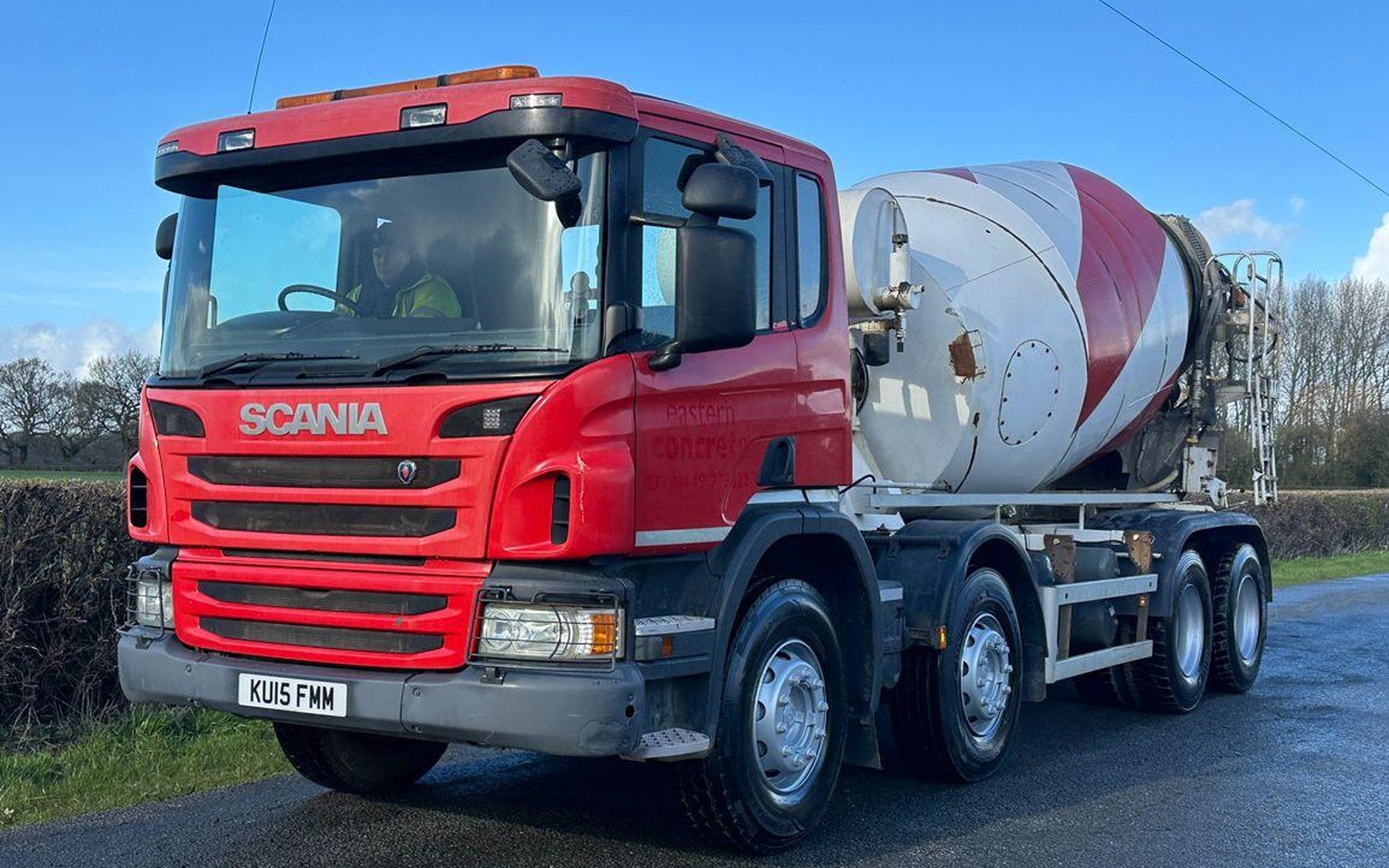
Producing concrete at the jobsite rather than buying it from a plant is not just a logistical preference. It is a fundamental shift in where the margin lives. With an on-site concrete mixer, your cost per yard drops to the raw input price plus your labor and fuel. The spread between that cost and your invoice rate is the profit center that makes mobile concrete a strong business. Plants charge for the concrete, the haul, the driver, the drum wash, and the short-load fee. You charge only for what you produce, and you produce only what you need.
We finance on-site concrete mixers in every configuration: volumetric truck units, trailer-mounted batching systems, and skid-mounted plants. Minimum transaction is $50,000. Application-only approval runs to approximately $400,000. Funding typically closes in one to two weeks, and B/C credit operators are welcome alongside prime borrowers.
The Business Case for On-Site Batching
Ready-mix concrete delivery works well when the plant is close, the load is large, and the pour can be scheduled precisely. A lot of concrete work does not fit that profile. Short loads, remote sites, precision mix designs, time-sensitive pours, and residential work with unpredictable scheduling all push operators toward on-site batching as the better economic model.
The concrete contractor who brings their own mixer to a residential subdivision can start a pour on homeowner convenience rather than plant dispatch convenience. The contractor who serves foundation contractors in suburban areas outside the plant's delivery radius captures work that no drum truck can profitably serve. Every job that a plant declines, or prices prohibitively, is an opportunity for an on-site batching operation.
The equipment has matured significantly over the past two decades. Modern on-site mixers use electronic metering systems that produce batch-to-batch consistency comparable to a fixed plant. The mix design quality argument for plant concrete has weakened considerably as volumetric metering technology has improved.
How On-Site Mixers Produce Consistent Concrete
An on-site concrete mixer, specifically a volumetric design, achieves consistency through precision metering at the point of mix. Each ingredient passes through a calibrated measurement system before entering the mixing chamber. The operator programs the mix design, and the machine batches to that specification within very tight tolerances.
Aggregate gradation control is one area where experienced operators invest extra attention. The bins hold coarse and fine aggregate separately, and the proportions are set by volume or weight depending on the machine's control system. A well-calibrated metered concrete mixer produces aggregate ratios that consistently match the target mix design, which is critical for structural concrete work where spec compliance matters.
Water-cement ratio is the other key variable. On-site mixers let the operator adjust the water addition in real time based on aggregate moisture conditions, something a drum truck driver cannot do once the load is batched at the plant. This flexibility makes on-site mixing especially valuable for hot-weather or cold-weather concrete where water adjustment is essential for workability and strength development.
For specialty applications like fiber-reinforced concrete mixing, an on-site unit can introduce fiber at a controlled rate during the mixing pass rather than relying on fiber that has already been sitting in transit concrete for forty-five minutes.
Who Gets the Most Value From On-Site Mixing
Not every concrete operation benefits equally from on-site mixing. The value is highest for operators in specific situations.
- Operators more than 30 minutes from the nearest plant. Every minute of haul time degrades slump and compresses the pour window. Beyond about 45 minutes, plant concrete becomes difficult to use on anything requiring consistent workability.
- Short-load specialists. Residential flatwork, pool decks, small commercial pads, and repair work typically order less than three yards per pour. Plant short-load fees can make those jobs unprofitable. An on-site unit produces two yards as easily as ten.
- Specialty mix producers. Colored concrete, flowable fill, shotcrete mixes, and fiber-reinforced designs benefit from the control and flexibility that on-site batching provides.
- Schedule-driven operators. If your crew starts at 6 a.m. and the plant does not open until 7, you have a one-hour production gap. An on-site mixer starts when you arrive.
Pool and hardscape contractors consistently rate on-site mixing as a competitive advantage in residential markets because it lets them work on smaller jobs at a profit margin that plant delivery cannot match.
Financing Structures for On-Site Mixers
On-site concrete mixers are financed as commercial equipment, and the structures are straightforward.
An equipment loan gives you a fixed monthly payment and a clear ownership path. The loan is secured by the machine. When the last payment clears, the lien releases and the unit is yours. This is the simplest structure and the most common choice for operators who plan to run the machine for its full productive life.
An equipment lease trades monthly payment flexibility for ownership. At lease end, you typically have the option to buy, return, or renew. A lease can make sense if you anticipate upgrading the mixer in five to seven years or if the off-balance-sheet treatment of a true operating lease has accounting advantages for your business.
For established operators who already own a working on-site mixer free and clear, a Sale-Leaseback releases equity from the machine into operating capital while keeping the unit in your rotation. It is a way to fund a second machine, cover a slow-season cash gap, or finance a business expansion without selling the asset you depend on.
Start Financing Your On-Site Concrete Mixer
A one-page application starts the process. We match your deal to lenders who fund on-site mixing equipment every day. B/C credit is fine. New and used mixers qualify. Expect funding in about one to two weeks.