
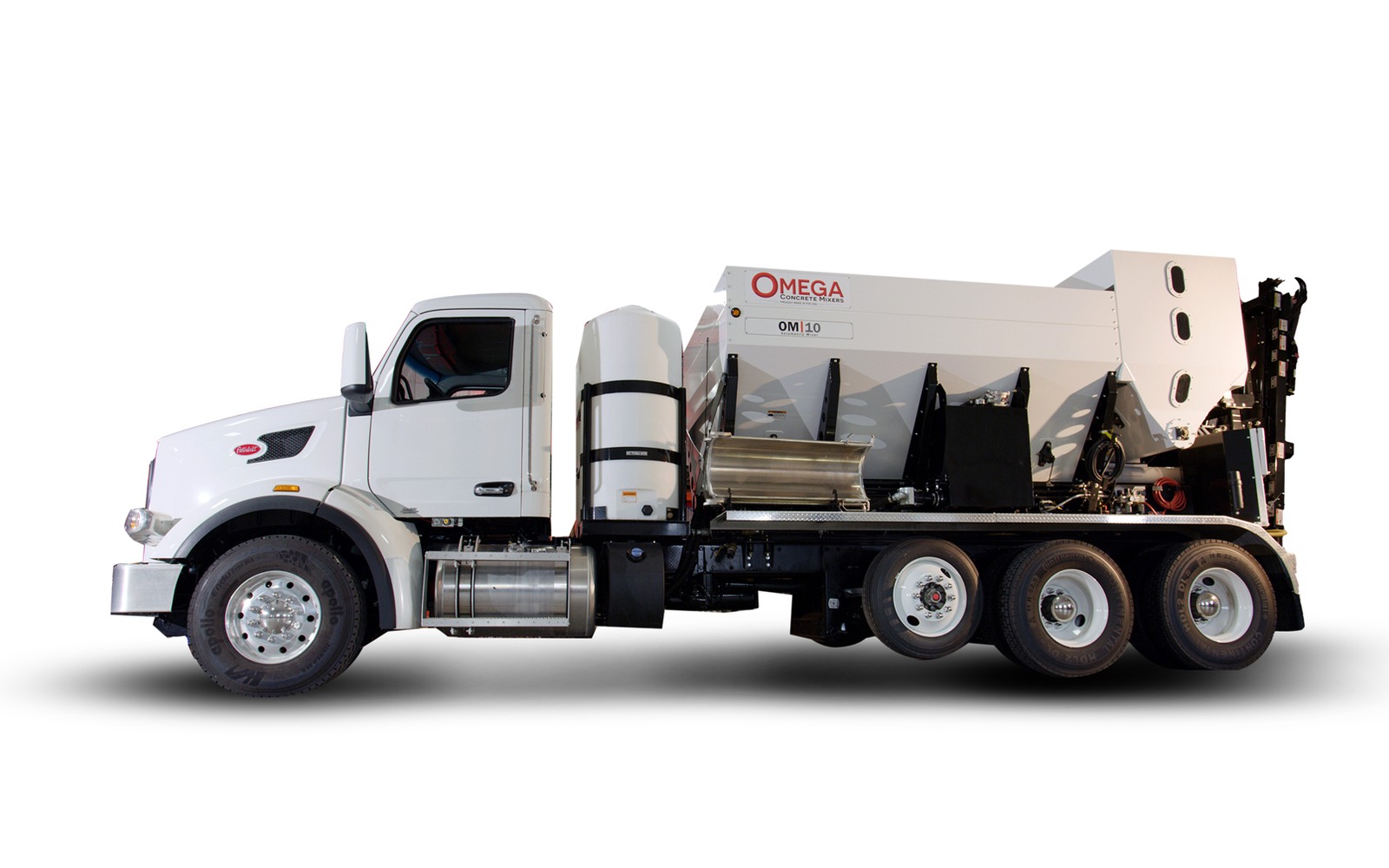
Flowable fill is one of the highest-margin concrete products a mobile operator can produce, and the math is simple. You are selling a low-cement, low-aggregate mix at a price per yard that the customer cannot get from a ready-mix plant on short notice, in tight access situations, or in the exact quantity they need. The plant sells truckloads. You sell exactly what the job needs. That precision is the margin, and a flowable-fill volumetric mixer is the machine that captures it.
We finance these units for utility contractors, excavation crews, and specialty concrete operators who have figured out that controlled low-strength material, also called CLSM, is steady work with good returns. Our minimums start at $50,000, most deals land between $100,000 and $150,000 or above, and we fund in one to two weeks for qualified borrowers.
How Flowable-Fill Units Are Built
A flowable-fill volumetric mixer runs the same platform as a standard mobile concrete mixer, but the mix design it produces is markedly different. CLSM mixes are lean: low cement content, often under 100 pounds per cubic yard, high fly ash or slag content in some formulations, higher water ratios, and fine aggregate rather than coarse stone. The result is a material that flows into voids and trench backfills without compaction equipment, then hardens to a controlled strength, typically under 150 psi, so it can be excavated again if needed.
The volumetric metering system on these units needs to handle fly ash or supplementary cementitious materials if the customer specifies them. Some operators keep dedicated flowable-fill configurations on separate units rather than retooling a concrete unit between pours. Others use a versatile unit that can swing between standard concrete and CLSM by resetting the meter ratios on the control panel.
Chassis selection for flowable-fill work often skews lighter than for full concrete production. Since output is typically under four yards per delivery stop and the mix is light by weight, many operators use Class 6 or Class 7 trucks and keep a small volumetric mixer format. That keeps weight below bridge postings for rural and suburban utility work where road access is frequently restricted.
Who Buys Flowable-Fill Mixers
Excavation and site-work contractors make up a large share of the customer base. Trench backfill for utility installations is a high-volume, recurring application. Gas, electric, and telecom utilities specify CLSM because it eliminates compaction lifts and reduces pavement settlement over the trench. A volumetric operator with a flowable-fill truck can follow the utility crew and deliver backfill as fast as the pipe is going in.
Septic and utility contractors use flowable fill for abandoning old tanks and sealing obsolete lines. Municipal road departments use it for pothole repair and abandoned conduit fill. The breadth of applications means the truck does not sit idle between specialty jobs. That diversified revenue profile is actually a strong point in a financing application, because the lender sees equipment earning across multiple contract types.
- Utility installation and trench backfill crews
- Gas and water main replacement contractors
- Municipal road and pothole repair departments
- Abandoned structure and tank abandonment specialists
- Excavation firms adding mobile CLSM service
Financing Terms for CLSM Units
Flowable-fill volumetric mixers generally price lower than full-production concrete units because the output requirements are lighter and the chassis is smaller. New units configured specifically for CLSM work can often be acquired for less than a full concrete mixer from the same manufacturer. That price point puts many flowable-fill setups within our application-only threshold, meaning no complex documentation packages for most borrowers.
Term lengths typically run 48 to 72 months. Borrowers with strong credit and new units often secure the longer end. Used units or B/C credit scenarios typically land at 48 to 60 months. An equipment loan is the most common structure: fixed monthly payment, fixed rate, clear payoff schedule. Some operators prefer an equipment lease if they want to keep the payment off the balance sheet or plan to upgrade the unit in three to four years.
For operators who already own a CLSM unit and want capital to purchase a second, a Sale-Leaseback on the existing unit can free up cash for a down payment or full purchase on the next one. We can structure both transactions together if the timing works.
Why This Segment Keeps Growing
Infrastructure rehabilitation spending has increased significantly across most U.S. states over the past several years, and CLSM consumption tracks that spending closely. Replacement of aging water and sewer mains, upgrade of buried electric distribution systems, and broadband expansion into rural areas all involve trenching operations that terminate in backfill. CLSM is the preferred backfill specification in most municipal and DOT projects because of its self-compacting properties and the reduction in pavement surface failures after installation.
Operators in markets like Houston, where subsurface utility density is extremely high and road cut permits are issued constantly, find their flowable-fill units running nearly every working day. In markets like Denver, where mountain soils and freeze-thaw cycles create chronic road surface issues, CLSM backfill is increasingly required rather than optional. Both types of markets support a strong equipment utilization story.
Flowable-Fill Mixer Financing Questions
Here is what contractors typically ask when they call about financing a CLSM unit.
Finance Your Flowable-Fill Mixer
If you have found a unit or are pricing one out, reach out and we will tell you exactly what you qualify for. The application is quick. Most approvals come back in a few business days, and funding follows within one to two weeks of document execution. For operators working with road and highway construction crews on DOT projects, having pre-approved financing means you can move the moment a unit becomes available.