
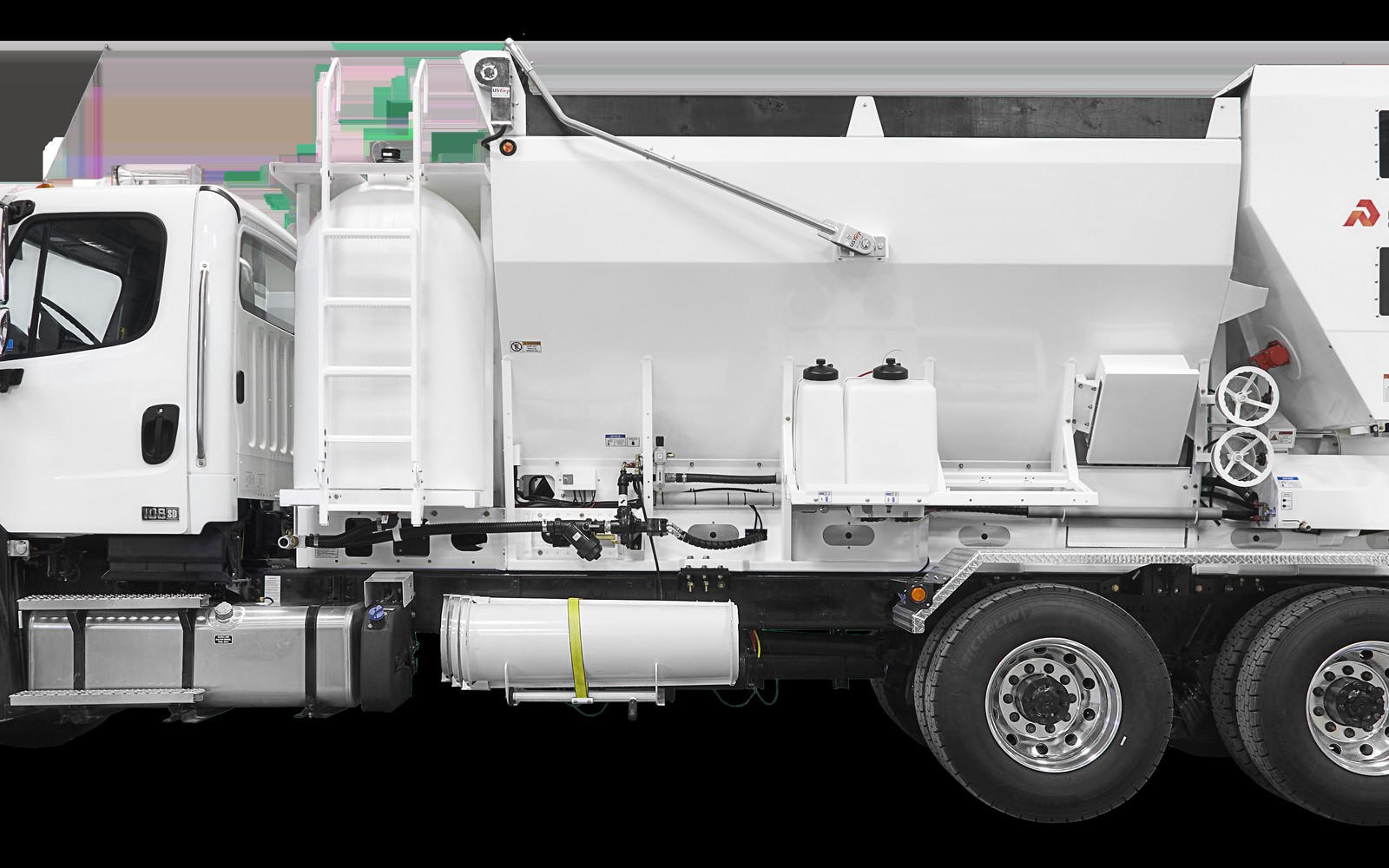
Site work touches concrete in a dozen places that most people do not think of as concrete work. Utility pads under electrical gear, transformer bases, catch basin inverts, headwall aprons, anchor blocks for ductile iron, curb replacements, and temporary pads for equipment staging: all of these require concrete in quantities that are awkward to order from a plant. Too small for a full drum truck, too important to skip. A volumetric mixer solves the exact-quantity problem for site work in a way that plant concrete never could.
Excavation and site-work contractors who add volumetric batching to their operation stop paying short-load minimums on every small pour and stop waiting on plant truck availability in the middle of a job sequence where the next trade is standing by. The on-site concrete mixer shows up when the site is ready, batches what the structure needs, and moves on. That is the right tool for the way site-work actually runs.
We finance volumetric mixers for site-work contractors with established operations and those in earlier growth phases. Our minimum is $50,000. Most units suited for a site-work operation run $100,000 to $150,000 and above. We consider B/C credit, new and used equipment, and private-party purchases. Most financing closes in about one to two weeks from a complete application.
Site-Work Contractors Who Run the Most Concrete
Not every site-work contractor runs enough concrete to justify a volumetric unit. The ones who do tend to have a combination of high concrete frequency and high variety. If you are pouring utility pads one morning, a headwall the next afternoon, and curb work at the end of the week, the plant truck model breaks down fast. Scheduling three deliveries for three small pours costs more in logistics time than the materials themselves.
Contractors doing subdivision infrastructure, commercial site development, and municipal utility work all fit this profile. Each project phase generates concrete tasks that are spread across the timeline and often too small individually to justify a full batch plant delivery. A volumetric unit collapses all of those into one resource that you control directly.
Contractors who self-perform foundation work in addition to site work have the clearest case for volumetric ownership. The foundation pours anchor the payback, and the site-work concrete tasks layer on top as additional revenue the truck generates without additional overhead. That dual utilization accelerates the payback on the asset considerably.
- Commercial site developers self-performing concrete scope
- Utility contractors with high pad and structure volume
- Municipal infrastructure contractors doing curb, gutter, and drainage work
- Subdivision developers handling both site prep and concrete infrastructure
The Right Volumetric Unit for Site-Work Applications
Site work does not typically demand the highest-output production units built for continuous commercial flatwork supply. What it demands is versatility, access, and low-quantity batching capability. A mid-size unit in the six- to eight-yard range handles most site-work concrete tasks efficiently without the tare weight and turning radius challenges of a full twelve-yard truck.
For site-work contractors who frequently need flowable fill for pipe zone bedding or utility trench backfill, a unit configured or upgradeable for flowable fill volumetric mixing adds that capability without a separate piece of equipment. Flowable fill, sometimes called controlled low-strength material or CLSM, replaces conventional backfill in utility trenches and is widely specified by utilities and municipalities for its consistency. Producing it on site instead of hauling it from a plant eliminates the delivery window entirely.
A grout volumetric mixer configuration is also relevant for site-work contractors who anchor anchor bolts, fill annular spaces around pipe, or grout equipment bases. These tasks use relatively small quantities of a specific mix that a volumetric unit handles cleanly from the same truck used for everything else.
Getting a Volumetric Unit into a Site-Work Fleet
Site-work contractors usually have existing equipment lines: excavators, dozers, compactors, and trailers. Adding a volumetric mixer to a fleet that already carries equipment debt is a question of whether the incremental debt service is covered by the incremental revenue the unit generates. For most contractors who reach the frequency threshold where a volumetric unit makes operational sense, the answer is yes within the first year of operation.
We structure financing as either an equipment loan or an equipment lease. Loans add the asset to the balance sheet and allow full depreciation capture. Leases keep the payment lower and the obligation off the balance sheet in most structures, which matters for contractors managing bank line covenants or bonding ratios. We walk through both options with real payment numbers before you decide.
For site-work contractors who have been in business less than two years or who are working through a B/C credit profile, our B/C credit equipment financing program connects you with lenders who specialize in construction asset financing rather than general commercial credit underwriting. The review looks at cash flow and the nature of the business, not just a credit score.
Making the Payment Work in a Site-Work Operation
The payment math on a volumetric mixer for a site-work contractor starts with how much you currently spend on short-load fees and small-quantity plant concrete deliveries each month. Most site-work operators who track that number are surprised by it. Short-load minimums from a plant, multiplied across several small pours per week, can approach or exceed a monthly payment on a volumetric unit.
On top of that, the margin on concrete you supply yourself versus purchasing from the plant adds up. A contractor who bills concrete by the yard on time-and-materials work and produces it at material cost below the plant price captures a spread on every yard that goes from the truck to the job. That spread is the business model that drives the payback on the equipment, and it compounds as volume grows.
Section 179 financing options help site-work contractors time the purchase for maximum tax advantage. The deduction in the year the truck goes into service reduces the effective acquisition cost, and structured correctly, the after-tax payment can be substantially lower than the face amount on the loan.
Frequently Asked Questions
What site-work contractors ask us before financing a volumetric mixer.
Add Volumetric Mixing to Your Site-Work Fleet
Apply today and most site-work contractor applications review in one to two weeks. Compare loan options or explore B/C credit programs if your credit profile needs a specialized lender. We help site-work contractors stop paying short-load fees and start banking the spread on every yard they produce.