
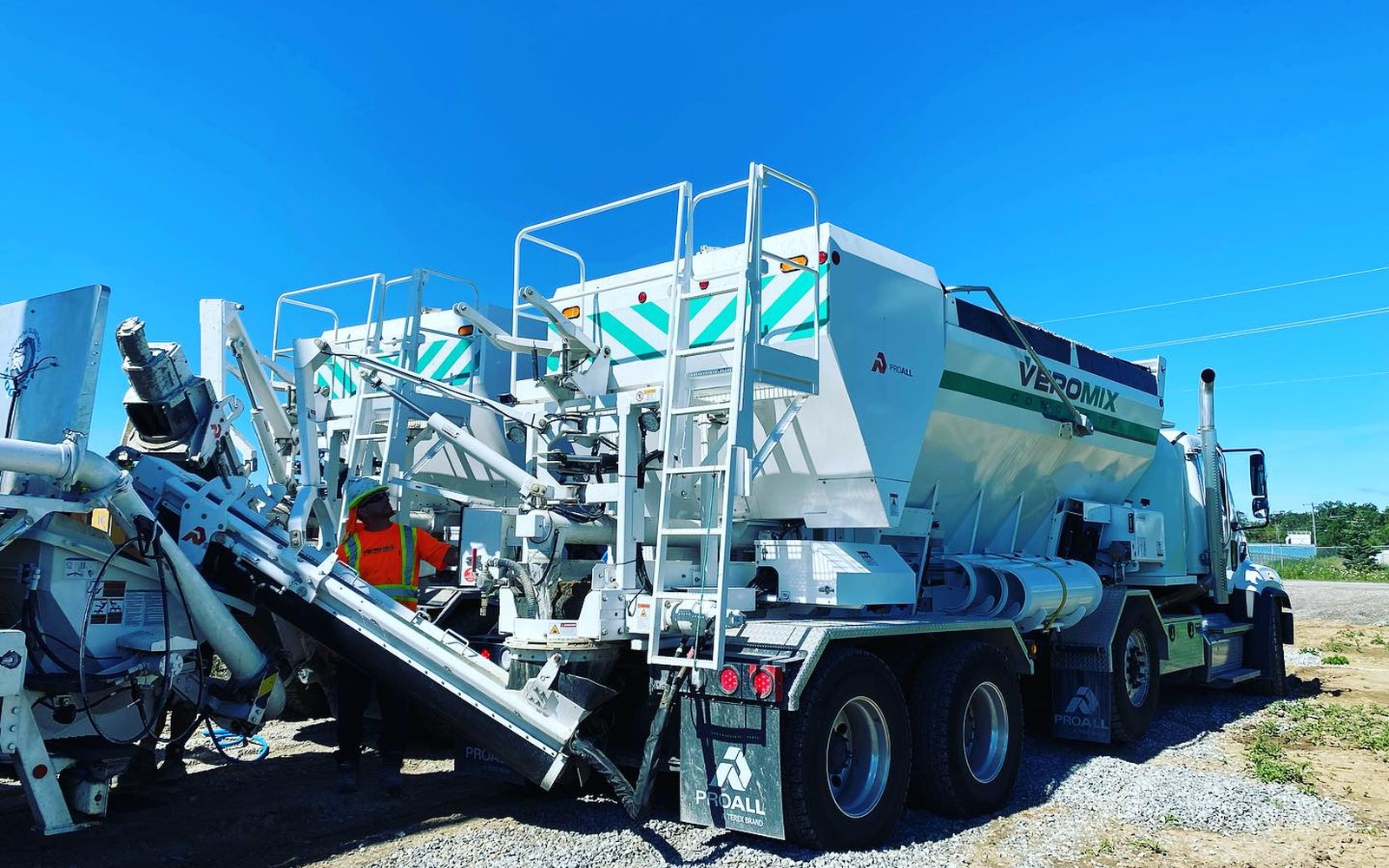
Buying a volumetric mixer at the end of the tax year and writing it off entirely in year one is one of the most direct ways the tax code supports businesses that invest in productive equipment. Section 179 of the Internal Revenue Code allows businesses to deduct the full purchase price of qualifying equipment in the year it is placed in service, rather than depreciating it gradually over five or seven years. A mixer you buy and put to work in December earns you the deduction for that entire tax year, even though the machine only worked for a few weeks of it.
The interaction between Section 179 and equipment financing is where the real opportunity sits. You do not have to pay cash for the machine to take the deduction. You can finance the mixer through a loan or certain lease structures, take the full Section 179 deduction based on the purchase price, and make monthly payments from the cash flow the machine generates. The deduction reduces your tax bill in year one while the machine earns revenue across the next five or more years. That is the margin play, and concrete contractors who plan their equipment purchases with this in mind consistently pay less tax than those who do not.
How Section 179 and Equipment Financing Interact
The mechanics are straightforward once you understand the sequence. You finance a qualifying volumetric mixer, the machine goes into service before December 31, and you elect Section 179 on your business tax return. The deduction is based on the purchase price, not the down payment or principal paid. So a $150,000 mixer financed with $25,000 down generates a $150,000 deduction, even though you only spent $25,000 in cash during the tax year.
The deduction has an annual limit, which Congress sets and adjusts periodically. For recent tax years, the Section 179 deduction limit has been well above the cost of a typical volumetric mixer, meaning most single-unit purchases can be fully deducted. The deduction also cannot exceed your business taxable income for the year, though excess deductions can be carried forward to future years.
Qualifying equipment under Section 179 generally includes tangible personal property used in business. Volumetric concrete mixers, whether a volumetric concrete mixer truck or a trailer-mounted volumetric mixer, are qualifying assets when used more than 50 percent for business purposes. The equipment must be placed in service (operational) during the tax year, not just purchased or financed.
Always confirm the current year's deduction limits and your specific eligibility with a qualified tax advisor before making any purchase or financing decision based on expected tax treatment. Tax law changes and individual circumstances vary significantly.
Running the Numbers on Section 179 Financing
The cash flow picture on a Section 179 financed purchase can be compelling. Consider a simplified illustration: an operator in a 25 percent effective tax bracket finances a $120,000 mixer. The Section 179 deduction of $120,000 reduces taxable income by $120,000, saving approximately $30,000 in taxes. The monthly loan payment on $120,000 over 60 months is a fixed, known cost. The tax saving comes back in year one, effectively reducing the net cost of the machine by the amount of the tax savings. The machine then continues earning for four more years against payments that you are now funding with after-tax income that is lower because of the deduction you already captured.
The numbers change based on tax rate, loan terms, and machine price. The concept does not. Financing a mixer to take a Section 179 deduction produces an upfront tax benefit that partially offsets the total financing cost, making the effective cost of the machine lower than the sticker price when you account for the tax impact.
This strategy pairs well with bonus depreciation financing, which provides additional first-year deduction opportunities for qualifying equipment. The two tools can be combined in some cases, though the interaction requires careful planning with a tax professional.
Equipment and Business Requirements for Section 179
Not all equipment and not all business situations qualify for Section 179. Key requirements:
- Equipment must be used more than 50 percent for business purposes
- Must be placed in service during the tax year for which the deduction is claimed
- Deduction cannot exceed business net income (no negative taxable income from 179 alone)
- Certain vehicle types have additional limitations (the mixer's classification as a specialty vehicle matters here)
- The business must be profitable in the deduction year, or the excess carries forward
For a diesel volumetric mixer or other purpose-built concrete production equipment, the 50 percent business use threshold is typically easy to meet since these machines have no meaningful personal use. The placed-in-service requirement is the timing one to watch: if you finance in late November but the machine does not arrive and go operational until January, the deduction shifts to the following tax year.
Operators serving precast concrete producers or other industrial clients with capital-intensive operations benefit from planning equipment purchases in context of the full tax picture, not just the equipment financing decision in isolation.
Timing Your Section 179 Financed Purchase
Year-end equipment purchases to capture Section 179 are common enough that lenders and dealers both expect the December surge. If you are planning a year-end purchase, start the financing process in October or early November. Getting the credit approved and the loan documented before December allows the equipment delivery and installation to happen without a funding bottleneck.
A on-demand concrete mixer that ships from a dealer and arrives ready to work is the cleanest case. Custom-built units or units that require installation take longer, and if delivery slips past December 31, the deduction year changes. Plan for lead time and add a buffer.
For operators in markets like Salt Lake City, UT where winter pours slow down, a year-end purchase means the machine is purchased in time for the deduction, ready to go fully operational when spring arrives. The equipment is working for you on the tax side even during the months it is sitting through winter conditions.
Section 179 in the Context of Volumetric Mixer Economics
The tax benefit of Section 179 is real, but it is a bonus on top of the business case, not the reason to buy a machine. The business case for a volumetric mixer is the margin story: batching on site instead of buying from a plant, pricing short loads correctly, serving customers that plant delivery cannot efficiently reach. Section 179 makes that business case more attractive by reducing the effective cost of the asset in year one, but an operator who would not buy the machine without the deduction should think carefully about whether the economics actually work for their specific situation.
That said, for operators who have already decided the machine makes sense, the deduction is not something to leave on the table. A concrete contractor in Waco, TX buying a fiber-reinforced concrete mixer to serve specialty construction accounts is not manufacturing a business reason to claim a deduction. They are buying a machine they need and using a code provision that Congress put in place to encourage exactly that investment.
Operators working with bridge and infrastructure contractors where mix design precision matters and short loads are common are often among the best candidates for a Section 179 financed mixer purchase. The machine creates a service capability advantage and the first-year deduction reduces the net cost of creating that advantage. Both benefits are real and simultaneous, which is exactly how these tools are supposed to work.
Finance a Mixer Before Year End and Take the Deduction
If you are targeting a year-end purchase for Section 179, start the financing now. Deals close faster when there is runway. Let us know what you are looking at and we will put a financing structure together that gets the machine in service before the deadline.