
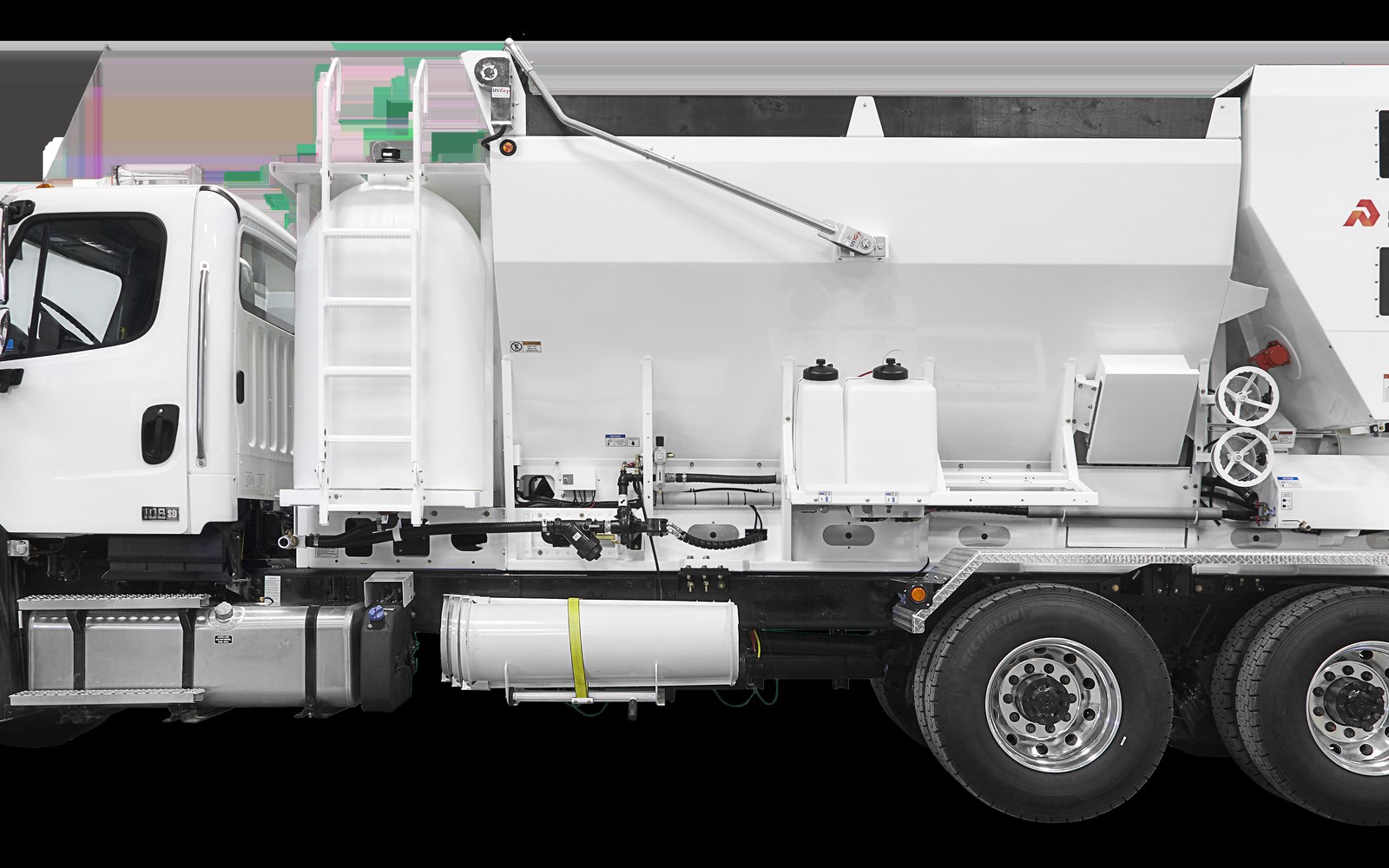
A precast plant has a strength that a drum truck never can: controlled factory conditions, consistent mix proportions, and curing that happens in a protected environment. But a precast operation also has a constraint: its product must be transported to the site, and every piece arrives as a fixed-weight, fixed-dimension unit. Field concrete, the grouting between panels, the topping slabs poured over precast deck members, the anchor pours for embedded connections, and the infill concrete that makes a precast system monolithic, still requires wet concrete on site. A volumetric mixer is how a precast producer or contractor working with precast systems handles that field concrete without depending on a batch plant delivery for every small pour.
Precast producers who add a volumetric concrete mixer truck to their field operation capture the concrete scope that sits around and below their precast products without subcontracting it. That capture improves margins and tightens schedule control on jobs where the precast erection sequence drives the critical path. Field concrete that is not coordinated with the precast erector creates schedule risk that a volumetric unit on the team eliminates.
We finance volumetric mixers for precast concrete producers and erectors. Our minimum is $50,000. Most production units in this segment run $100,000 to $150,000 and above. We work with B/C credit situations, new and used equipment, and private-party transactions. Funding typically completes in about one to two weeks from a full application.
Where Precast Producers Use Wet Volumetric Concrete
Precast concrete systems generate field concrete needs at multiple points in a project. Prestressed double-tee decks require grouted keyways between the flanges. Hollow-core plank flooring systems need a structural topping slab poured in the field. Precast column bases require grout pads. Precast panel joints are often field-poured. Precast manholes and vault sections require field connections to pipe penetrations. Every one of these tasks requires wet concrete in small quantities at precise mix designs that match the structural requirements of the adjacent precast element.
A volumetric mixer allows the precaster or erector to batch the exact mix specified for each connection type at the site. The grout pad mix for a column base has different proportions than the keyway grout between double-tees, which differs again from the structural topping pour. A single volumetric unit batches all three without ordering three separate plant deliveries with their minimum charges and delivery scheduling overhead.
Precast producers who also manufacture septic tanks, utility vaults, and other buried precast structures often have installation crews that encounter field concrete requirements at nearly every installation: pipe penetration grouting, manhole adjustment ring pours, utility contractor interface work on the site. A volumetric unit in the field crew resolves all of those needs without a separate concrete order.
Precast Businesses That Benefit from Mobile Batching
Precast concrete producers who also self-perform erection and installation are the primary candidates. When you control the full scope from manufacture through installation, adding mobile batching capability closes the loop on field concrete without creating a new sub-contractor relationship or plant delivery coordination.
Precast structural erectors who do not manufacture but assemble precast systems in the field have the same need. The erector is present at the connection pour sequence, and having a volumetric unit on the erection crew eliminates the dependency on the GC's concrete sub or the plant truck schedule at the moment when connections need to happen in sequence with the crane pick.
Architectural precast producers, those making wall panels, column covers, and decorative precast elements for building facades, often deliver product to urban or constrained jobsites where batch plant access for field pours is limited. A small volumetric mixer that accompanies the installation crew handles the field concrete without requiring the GC to arrange a separate delivery to a site where concrete trucks may have limited access.
Financing Options for Precast Producers
Precast concrete producers are typically established manufacturers with plant assets, customer contracts, and multi-year operating histories. Adding a mobile volumetric unit is a capital investment that most precast operations can support through standard equipment financing without unusual documentation requirements.
An equipment loan adds the truck to the balance sheet as a depreciable asset. Section 179 deduction in the purchase year is available and meaningful for operations with substantial taxable income. An equipment lease is the alternative for producers who prefer to manage the plant's capital budget separately from field equipment and want the lower monthly commitment a lease provides.
For precast producers who already own a volumetric unit and have paid the balance down, a cash-out refinance converts that equity to working capital for a second unit, plant expansion, or seasonal material float. The mobile unit stays in service, and the cash comes from the equity accumulated over the payment period.
Application-only financing up to approximately $400,000 keeps the process efficient. Three months of bank statements, the purchase quote, and credit are typically sufficient for an established precast business. We tell you quickly where you stand rather than keeping you in a review that runs longer than the project schedule allows.
Equipment Configurations for Precast Field Work
The volumetric configuration that serves precast field work best is typically a compact unit, because precast erection happens on urban and constrained sites more often than in open rural environments. A small volumetric mixer maneuvers through the site access that precasters contend with on high-rise and urban commercial projects without the turning radius issues that a full production truck creates.
For precast producers who supply below-grade precast structures, a unit with grout-mix capability is particularly useful. The grout volumetric mixer configuration produces the high-cement, low-water mixes used for manhole ring setting, pipe boot grouting, and connection grouting at the mix design the engineer specifies.
Precast producers doing large-scale industrial or infrastructure installations where topping slabs and structural connections require higher volumes may want to look at a mid-size unit in the eight to ten yard range that can keep pace with the erection sequence on a large precast structural frame. A 8-yard volumetric mixer is a common choice in that range, balancing access and production capability for precast erection field work.
Frequently Asked Questions
Questions precast producers and erectors ask most often about volumetric financing.
Add Mobile Batching to Your Precast Operation
Apply today. Most precast producer financing applications complete the review in one to two weeks. Explore loan options, compare a lease structure, or ask about cash-out refinancing on existing equipment. Field concrete should not be the constraint on a precast project schedule, and we help you finance the unit that removes it.