
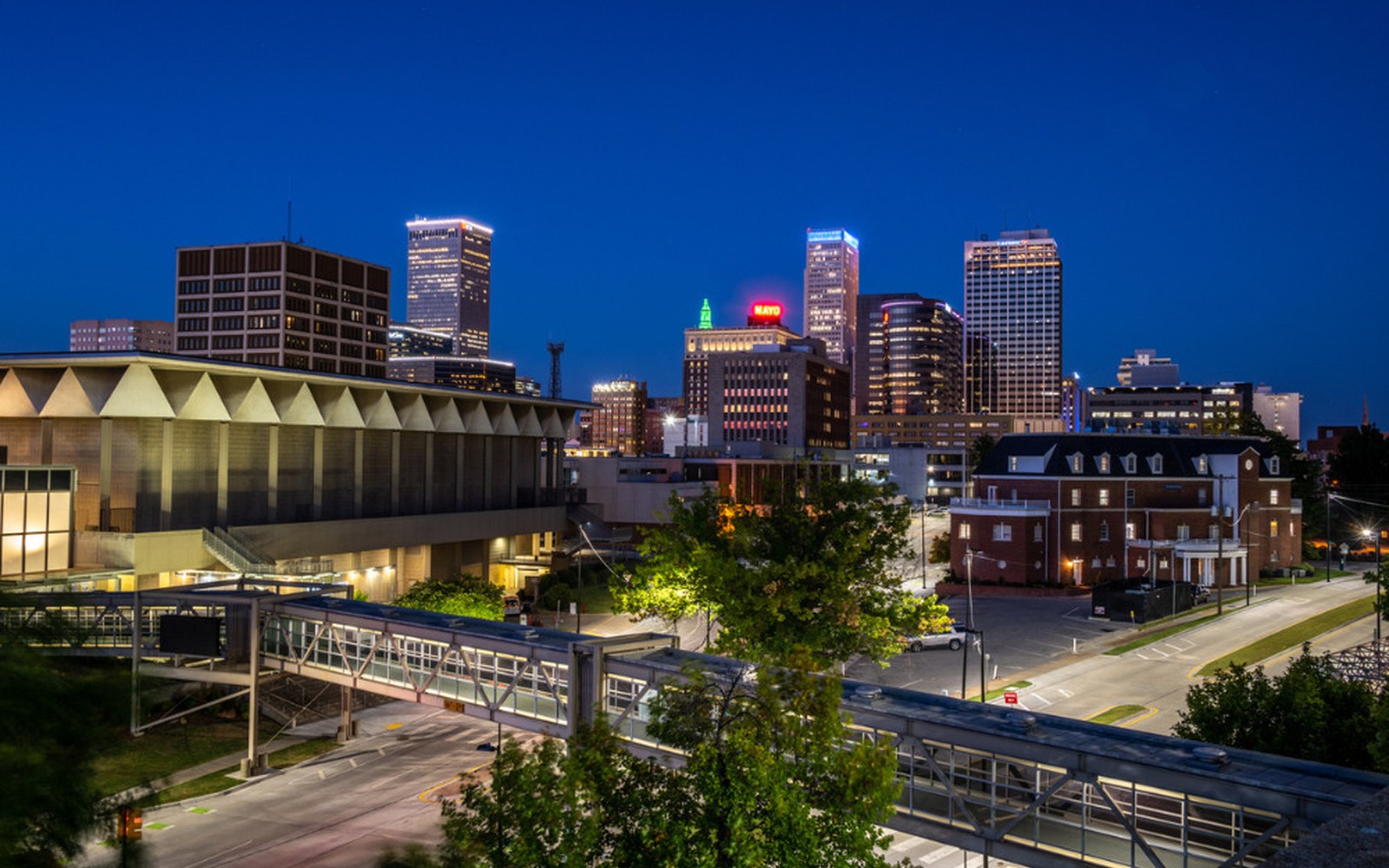
Tulsa's position as a major inland port and pipeline hub means the city runs on industrial infrastructure, and industrial infrastructure runs on concrete. From the Keystone Dam corridor to the Port of Catoosa, from the I-44 industrial belt to the growing midtown and south Tulsa residential expansion, concrete demand here is layered and consistent. Operators who batch on site cut the plant out of the equation and bank the margin directly.
We finance truck-mounted volumetric mixers and all related mobile batching equipment for Tulsa-area contractors. Minimum deal size is $50,000, with most single-unit transactions running between $100,000 and $200,000. Application-only underwriting handles deals up to roughly $400,000 without requiring a full financial package. B and C credit profiles are reviewed on a case-by-case basis rather than auto-declined. Funding runs about one to two weeks from a complete application.
Tulsa's Industrial and Construction Landscape
The Port of Catoosa, sitting on the Arkansas River navigation system and ranking among the inland waterway ports in the country by tonnage, anchors a significant industrial presence in northeast Tulsa. The port handles steel, aggregate, and manufacturing inputs that support fabrication and heavy industry operations throughout the region. Those operations generate concrete demand for expansion, maintenance, and new facility construction at a rate that residential markets alone do not match.
Tulsa's oil and gas history is well documented, and the infrastructure that serves the industry, including compressor stations, processing facilities, and pipeline corridors throughout northeastern Oklahoma and the Osage Hills, continues to require concrete work. Energy construction contractors working in those corridors benefit from volumetric equipment for the same reason any remote or rural job site does: the plant is far, the pour requirement is finite, and a drum truck does not make economic sense for a quarter-yard patch on a compressor pad.
On the residential side, south Tulsa and the communities along the Creek Turnpike corridor have been consistent growth areas. New subdivisions and the commercial strip development that follows residential growth create steady pour demand for slabs, curb and gutter, driveways, and light commercial foundations.
What Equipment and Operations Qualify
Our financing covers the full range of volumetric mixing equipment used in the Tulsa market. Truck-mounted units on Class 8 and Class 7 chassis, tandem-axle volumetric mixers, and trailer-mounted volumetric mixers all qualify. New equipment from recognized manufacturers, used machines in good mechanical condition, and reconditioned units that have gone through an independent restoration process are all financeable.
The business operating the equipment can be a sole proprietorship, an LLC, an S-corp, or a C-corp. Multi-owner businesses can apply with both guarantors. Startups with little operating history are considered under our new-business startup financing program, which typically requires a stronger down payment to offset the shorter track record.
Operators who already own a volumetric mixer and want to leverage that asset, whether for working capital, expansion, or improved cash flow, can apply for refinancing or a sale-leaseback. The machine's current equity is the key variable in structuring those transactions.
Loan Structures and Payment Terms
Loan terms for volumetric mixer financing typically run from 36 to 84 months, with the payment structured around what the equipment realistically earns in a normal operating week. A Tulsa-area contractor running a mix of residential flatwork, commercial slab pours, and the occasional oilfield infrastructure job is looking at a payment that should be covered by roughly two to four operational days of revenue from the truck, depending on the deal size and term selected.
For operators with a strong preference for cash preservation, an equipment lease often produces a lower monthly outlay than a loan, at the cost of a buyout option at lease end. The dollar-buyout lease preserves your right to own the machine outright for one dollar at term end. The fair-market-value lease gives more flexibility on the return or renewal side. We help you match the structure to your business model.
Tax year timing matters for Tulsa operators who want to use bonus depreciation financing alongside the purchase. Getting the unit into service before year end and pairing that with appropriate bonus depreciation treatment can shift real tax dollars in the year of acquisition. This is worth modeling before you decide on a lease versus a loan.
Related Financing Paths Worth Knowing
Beyond the standard purchase loan and lease, a few structures come up regularly for Tulsa-area operators. The Sale-Leaseback is particularly useful for contractors who have equity tied up in equipment but need cash for a large project deposit, a second truck, or operational expenses during a slow billing cycle. You sell the machine to the lender at its current market value, use the cash however the business needs it, and lease the machine back for continued use at a monthly rate. No disruption to operations.
Cash-out refinancing on a paid-off or near-paid-off mixer follows a similar logic. If your machine's current market value exceeds the payoff balance, the refinance produces cash beyond the payoff, unrestricted for any business purpose. Tulsa contractors running fleet expansion or taking on a larger commercial project often use this mechanism to fund the next phase without a separate loan application.
Get Your Tulsa Volumetric Mixer Financed
Applications take minutes. Decisions typically come back within 24 to 48 business hours and funding follows in about one to two weeks. Whether the deal is a new purchase, a refinance, or a sale-leaseback on a unit you already own, reach out through our contact form or call to get started on a Tulsa volumetric mixer deal.