
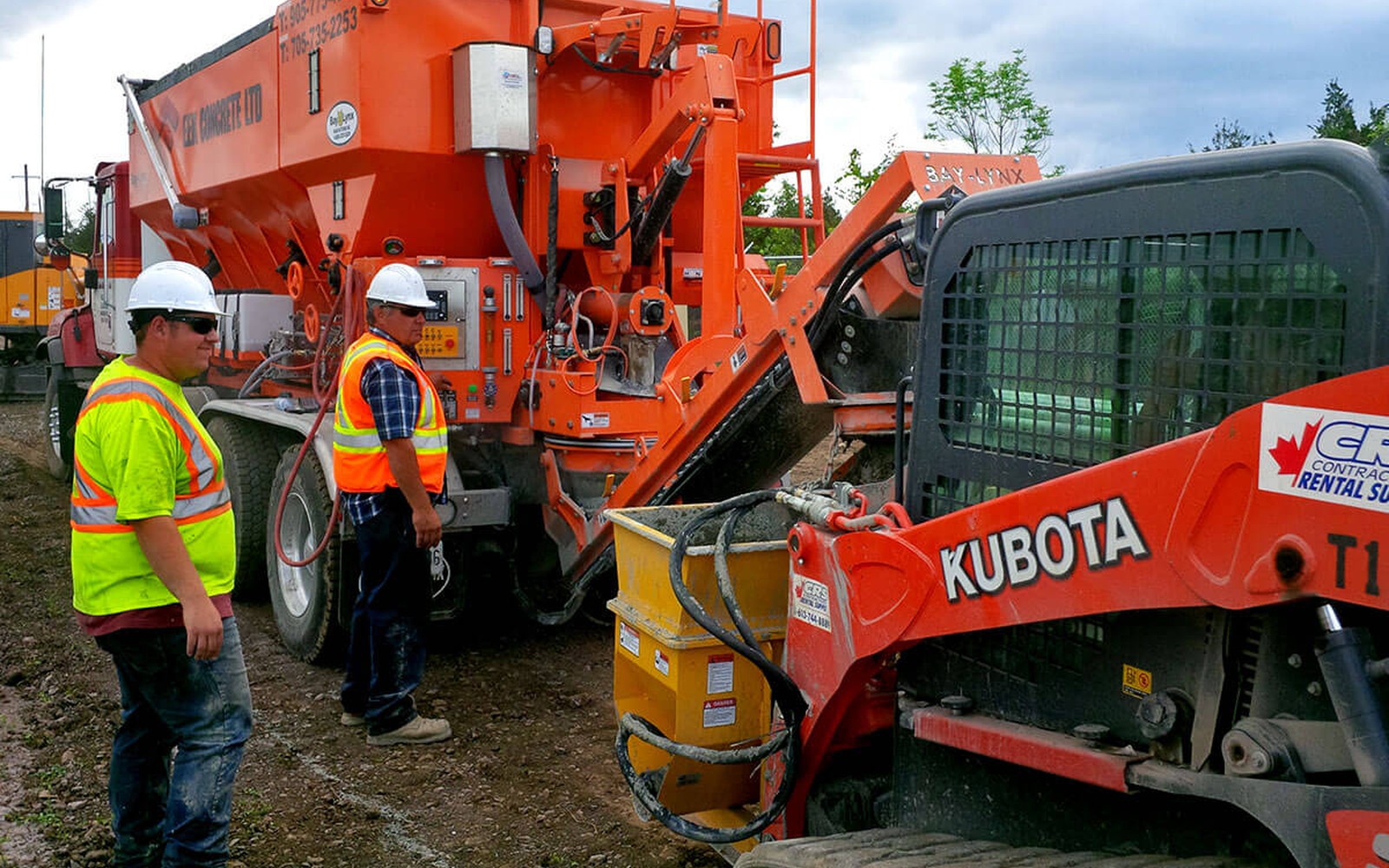
Two services, one truck, one trip to the job. A volumetric mixer with stone slinger delivers concrete for the pour and stone, sand, or aggregate for the sub-base or drainage layer without the operator needing a second vehicle. That combination collapses what used to be two deliveries into one stop, which improves your per-job margin and your daily truck utilization simultaneously. For concrete contractors who also place base material, this configuration is one of the highest-return equipment investments available.
We finance combination mixer-slinger units for concrete contractors, pool builders, driveway installers, and drainage contractors who have figured out the revenue advantage of offering both services from a single truck. Minimum deal size is $50,000. Most fully configured mixer-slinger combinations price between $150,000 and $280,000 depending on the mixer capacity, slinger reach, and chassis. We fund new and used units, work with B/C credit, and typically close in one to two weeks.
How the Combination Unit Is Built
A mixer-slinger combination pairs a standard volumetric concrete mixer front section with a stone slinger conveyor system at the rear. The concrete mixing section operates independently: it batches cement, aggregate, and water through the metering system and discharges fresh concrete as on any other volumetric unit. The slinger section uses a high-speed conveyor belt and a directional chute to throw aggregate, gravel, decorative stone, or sand to distances that can exceed 50 feet depending on the model and material density.
The two systems can often run simultaneously or in sequence on the same job. A concrete driveway job might involve the truck placing two inches of compacted gravel sub-base with the slinger, then moving to the pour position to deliver concrete for the slab. One truck, one operator, two materials, one visit to the job site. That compression of labor and mobilization is the business case.
Stone slingers are particularly effective in tight-access applications. A narrow side yard, a backyard pool area, or a utility corridor where aggregate needs to be placed without driving equipment over the work surface all benefit from the slinger's stand-off reach. Combined with the concrete capability, the unit serves nearly any residential or light commercial concrete and aggregate job without requiring a companion truck.
Some operators compare this setup to the conveyor-belt concrete mixer format, which uses a discharge conveyor for concrete rather than direct chute discharge. The mixer-slinger combination is different: the slinger is for aggregate materials, not concrete, while the concrete side discharges through the standard volumetric chute system.
Who Gets the Most from This Setup
Pool and hardscape contractors are consistently the most enthusiastic buyers of mixer-slinger combinations. A pool shell pour involves shotcrete or concrete, a deck pour involves flatwork concrete, and the surrounding area often needs aggregate placement for drainage. The slinger handles the aggregate around the pool, under the deck, and in drainage beds, while the concrete side handles the pour. A single crew with one truck covers the concrete and aggregate work across a complex job.
Residential concrete contractors doing driveways, walkways, and patios use the slinger to place driveway base, gravel drainage beds, and decorative rock after the concrete is poured. Utility contractors use it to place bedding sand around buried pipe without running a separate aggregate truck on-site. The list of applications is long, which is part of why utilization rates on these units tend to be high. High utilization is the thing that makes a loan payment look small relative to the revenue the truck generates.
Financing Structure for Mixer-Slinger Units
Combination mixer-slinger units carry higher price tags than standard volumetric mixers because of the slinger system cost and the chassis upgrades needed to handle the combined weight. Most new fully configured units are priced above $150,000, and premium configurations with extended slinger reach and higher concrete output can approach $300,000 on a new Class 8 chassis.
An equipment loan is the most common structure for these purchases. Fixed rate, fixed payment, ownership from day one. Terms out to 72 months for new units with strong credit. Used units and B/C credit scenarios typically top at 60 months. The combined unit is treated as single collateral for the loan, which keeps the structure simple.
Operators who already own a stone slinger and want to add the volumetric concrete capability, or vice versa, can sometimes finance just the upgrade component as a separate loan secured against the combined unit after installation. That path requires the installation to be complete and the combined unit to be re-titled before we close, but it can reduce the capital outlay compared to buying a new combination unit outright. Discuss your situation with us and we will walk through what is workable.
For operators doing their first combination unit, the startup financing path is available if you have concrete or construction industry experience and can show a customer pipeline or signed contracts for the combined service offering.
Mixer-Slinger Combination Financing Questions
These questions come up most often when contractors explore financing this combination setup for the first time.
Finance Your Mixer-Slinger Combination
If you are ready to add combination concrete-and-aggregate service capability, the financing conversation starts with one application. Tell us the unit you are looking at, the purchase price, and your concrete and aggregate service history. We will tell you exactly what the approval looks like and what the payment structure is. Operators in markets like Raleigh and Phoenix, where residential concrete and hardscape work is constant, often find combination units among the most productive trucks in their fleet. Get yours financed and in service.