
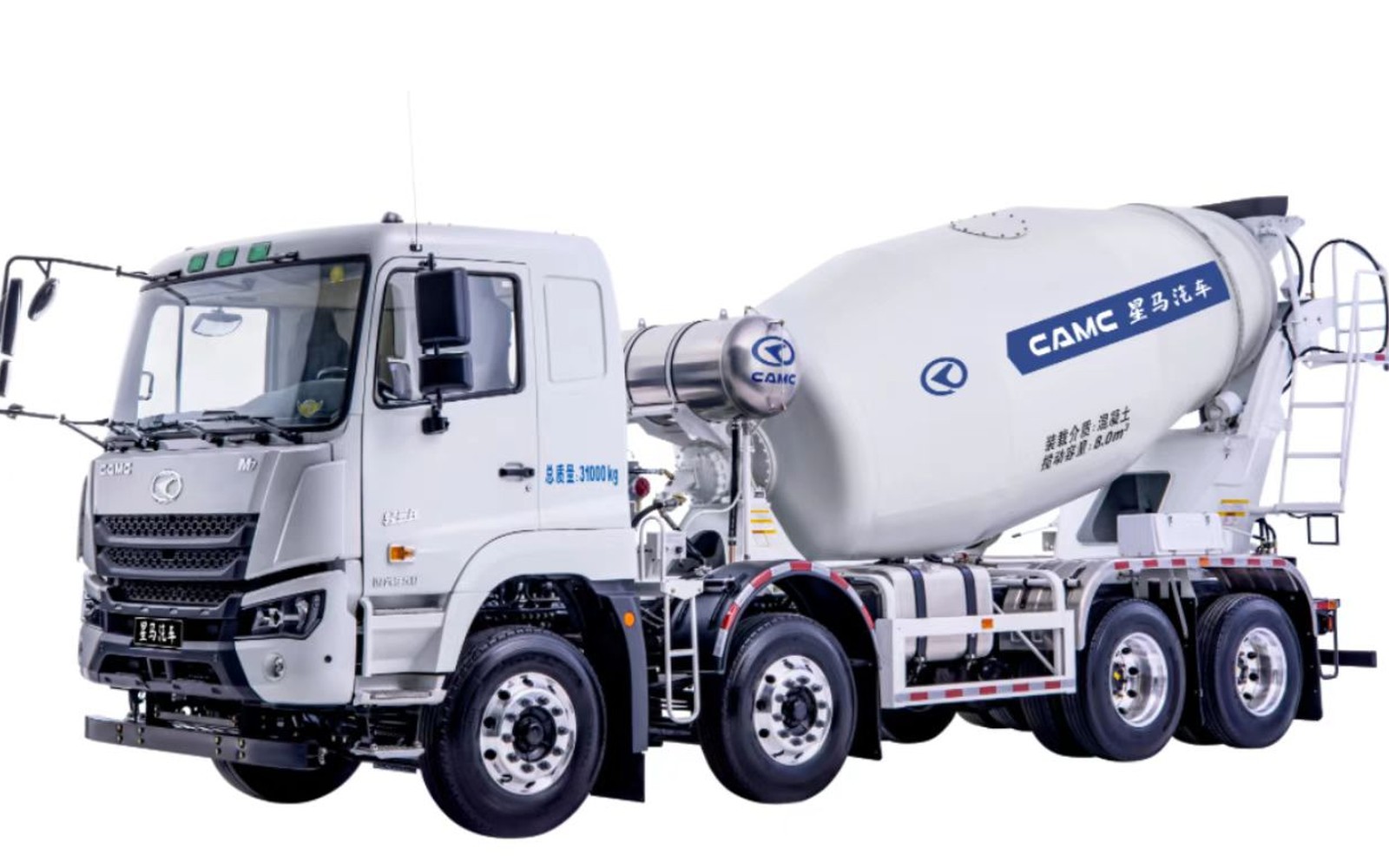
When the job needs twelve yards per trip, a tri-axle rear suspension is not optional. It is how you carry that payload legally, safely, and without exceeding the tire load ratings that protect the chassis and the road. A tri-axle volumetric mixer is built for operators who have outgrown tandem-axle capacity and are running jobs where every additional two yards per trip translates directly to crew productivity and daily revenue. The third rear axle adds gross vehicle weight rating while distributing load across more tire contact points, which also matters on weight-restricted roads and bridge routes.
We finance tri-axle volumetric mixers as standard commercial equipment. Minimum $50,000, application-only to approximately $400,000 for deals within range, full-doc for larger transactions. Funding in one to two weeks on standard deals.
Tri-Axle Chassis Mechanics and Payload Advantage
A tri-axle rear suspension adds a third rear axle (the lift axle or pusher axle) behind the two drive axles on a standard tandem. Under load, all three rear axles share the weight, which increases the allowable payload significantly. Under no-load or low-load conditions, the lift axle is raised, reducing tire wear and improving fuel economy.
For volumetric concrete mixers, the tri-axle configuration enables 11- to 12-yard payload capacity. At twelve yards, the total loaded vehicle weight including the truck cab, mixing unit, aggregate, cement, and water can exceed 66,000 pounds on some configurations. The tri-axle suspension distributes that weight across enough axles to remain within federal bridge formula requirements on most standard routes.
The trade-off compared to a tandem-axle volumetric mixer is added chassis complexity, higher fuel consumption under load, and reduced maneuverability in very tight residential environments. The tri-axle configuration is optimized for commercial, infrastructure, and highway concrete applications where the increased payload justifies those trade-offs.
When the job calls for the full volume of a 12-yard volumetric mixer, the tri-axle is the chassis that makes it possible.
Operations That Require Tri-Axle Capacity
Tri-axle volumetric mixers belong in specific operation types where maximum payload per trip is a production priority.
Infrastructure and highway concrete contractors. Road paving, bridge deck pours, interchange construction, and DOT project concrete work involve large continuous pours where maximum per-trip capacity reduces the number of refill cycles and keeps the paving or forming crew productive. Road and highway construction contractors increasingly specify tri-axle volumetric mixers for these jobs when on-site batching is the supply model.
Large foundation and commercial slab contractors. A commercial contractor pouring a 50-yard foundation section or a large building pad benefits from tri-axle capacity because it reduces the number of load cycles required to complete the section. Fewer cycles means less downtime for the pour crew and faster overall completion. Commercial concrete contractors in high-growth markets often add a tri-axle unit specifically to take on larger pour sections that their tandem-axle fleet cannot handle as efficiently.
Oilfield and remote concrete producers. In remote basins where the nearest concrete plant is an hour or more away, maximum-payload volumetric production becomes the entire supply chain. A tri-axle unit producing at full capacity reduces the number of trips between the ingredient supply point and the active pour, which matters when the round-trip distance is measured in miles rather than minutes. Oilfield and energy construction contractors are consistent buyers of tri-axle volumetric units for exactly this reason.
Financing a Tri-Axle Volumetric Mixer
Tri-axle volumetric mixers price at the upper end of the volumetric market. New units with full tri-axle specifications and twelve-yard capacity typically run $350,000 to $450,000 and above. These transactions generally fall in the full-documentation category, requiring business tax returns and a profit and loss statement alongside the credit application and bank statements.
Well-maintained used tri-axle volumetric mixers from reputable brands trade at meaningful discounts. A three- to five-year-old unit in good condition may price landing between $180k and $280k depending on hours, condition, and brand. Used units in this range often fall within the application-only approval window.
Financing structures for tri-axle mixers include standard equipment loan options with 60 to 84 month terms, equipment lease arrangements for operators focused on payment management over ownership, and equipment refinancing for existing tri-axle owners who want better terms or want to pull equity for fleet expansion.
For operators in high-demand construction markets like Dallas, TX or Salt Lake City, UT where infrastructure spending is sustained, pre-qualifying for a tri-axle purchase before you identify a specific unit means you can move when the right machine comes available in the dealer or private market.
The Funding Timeline
Standard tri-axle deals in the application-only range follow the same path as any commercial equipment loan: complete application, bank statements, and equipment details submitted; decision in 24-48 hours; funding in about one to two weeks.
Larger tri-axle transactions that require full documentation add time for document collection and lender review, typically extending the timeline to two to three weeks from complete package submission. Having your tax returns and P&L ready at application time compresses the timeline significantly.
We work with multiple lenders who actively fund tri-axle volumetric equipment. Your deal goes to the lender whose appetite matches your profile, which means fewer declines and faster approvals than a direct bank approach where the equipment type may be outside the bank's current lending focus.
Finance Your Tri-Axle Volumetric Mixer
Large-capacity deals are our specialty. B/C credit considered. New and used tri-axle units financed. Full-doc and application-only options. Apply today and get the process moving.