
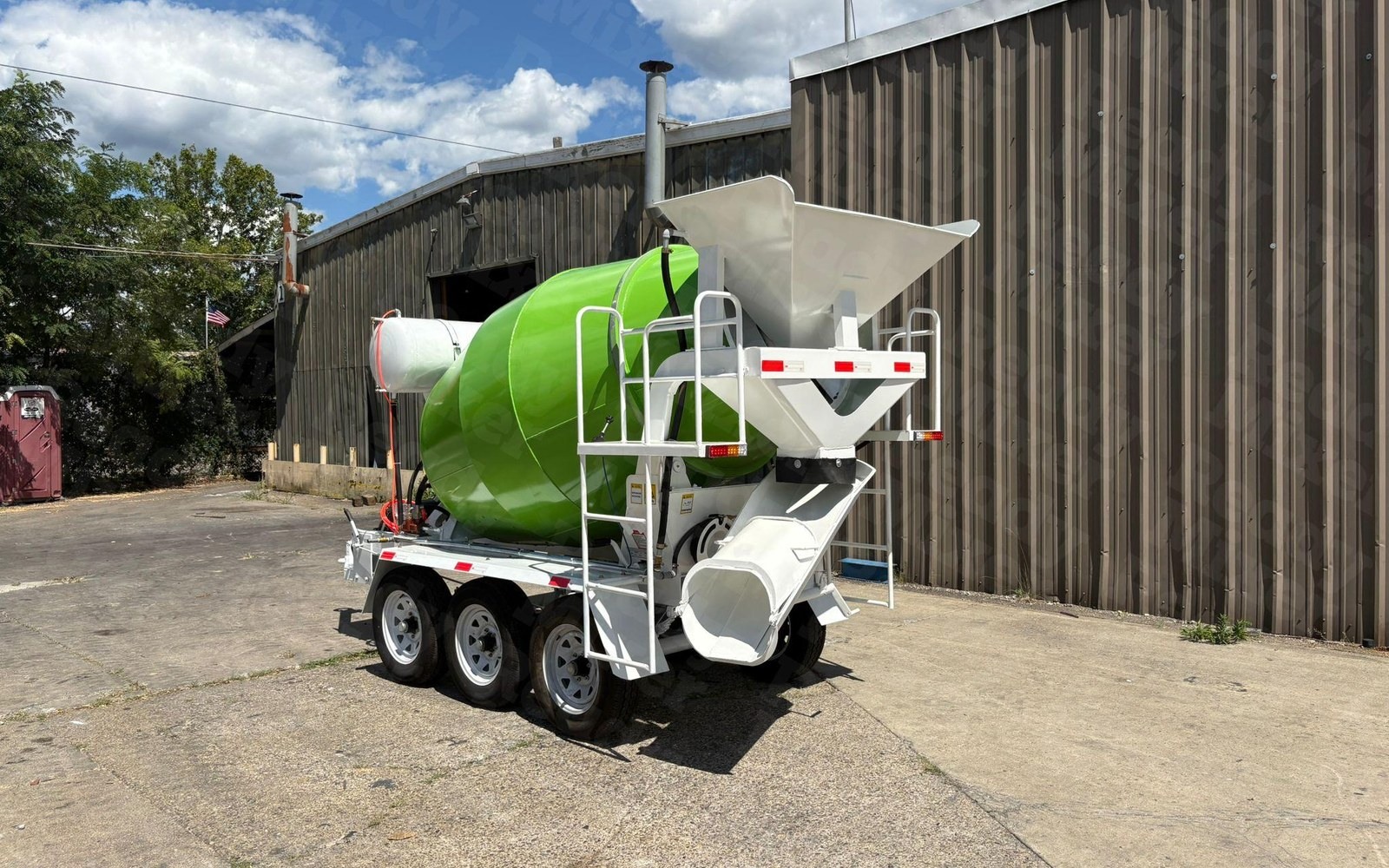
Cement slurry is one of the most versatile foundation and geotechnical materials in construction. You inject it to stabilize weak soils. You pump it to fill abandoned mine shafts. You use it as a binder in soil mixing and deep mixing operations. The commonality is that it has to be fresh when it goes in, because a slurry that has started to set in transit is a slurry that does not perform as specified. A cement slurry mixer truck solves that freshness problem by batching the slurry at the point of injection, not at a plant an hour away.
We finance cement slurry mixer trucks for geotechnical contractors, deep foundation crews, and soil stabilization specialists who have recognized that on-site batching is the only way to consistently deliver the slurry performance their specifications require. Minimum deal size is $50,000. Most slurry mixer truck configurations price between $100,000 and $220,000 depending on the chassis, pump integration, and slurry output rate. We fund in one to two weeks and work with B/C credit.
What a Cement Slurry Mixer Truck Does
A cement slurry mixer truck is a volumetric platform optimized for high-water, high-cement, low-aggregate or no-aggregate output. The mix is a pumpable suspension of cement and water, sometimes with fly ash, bentonite, or chemical additives depending on the application. The truck meters cement at controlled rates into a mixing chamber, produces a consistent slurry, and feeds it directly to a pump or injection head.
The output consistency requirement is stringent because the slurry's performance in the ground depends on its water-cement ratio at placement. A ratio that varies due to inconsistent mixing results in variable strength zones that can undermine the geotechnical objective. A volumetric truck producing slurry at a fixed metered ratio from freshly introduced materials delivers consistent performance that a plant-and-haul approach cannot match when job site distances are significant.
Cement slurry mixer trucks often share design features with the grout volumetric mixer category, but they are configured for higher water-to-cement ratios and higher output fluidity than structural grout applications require. The slurry is meant to flow and permeate or encapsulate, not to remain in place and harden rapidly. The mixing chamber design reflects that difference, favoring high-speed agitation over the controlled-rate mixing needed for drier grout mixes.
Some operators integrate a cement slurry truck with a separate injection pump on a skid or second truck, creating a two-vehicle system where the slurry truck supplies the pump continuously. Others use a single-unit configuration where the slurry mixing and pumping systems are integrated on one chassis. Both configurations are financeable.
Who Operates Cement Slurry Trucks
Geotechnical and specialty foundation contractors are the core market. Deep soil mixing, jet grouting, and soil-cement stabilization all require cement slurry production at the job site. These are high-value, technically demanding contracts that support premium day rates. A contractor who can mobilize a self-contained slurry mixing system to a remote or constrained site has a capability that most competitors cannot match.
Oilfield and energy construction contractors use cement slurry for well cellar stabilization, pad construction in soft ground, and secondary containment base slabs where the ground needs chemical stabilization before placement. The remote nature of many oilfield sites makes a self-contained slurry system particularly valuable because plant deliveries to those locations are often impractical or prohibitively expensive.
Bridge and infrastructure contractors use cement slurry trucks for drilled shaft sealing, caisson construction, and slope stabilization on projects where the volume needed is too small for a plant and too large to mix by hand. Municipal road and bridge programs often include soil stabilization work that requires slurry injection. Those contracts come with good payment terms and repeat opportunities for established operators.
- Deep mixing and jet grouting contractors
- Soil stabilization and ground improvement specialists
- Oilfield pad and containment contractors
- Bridge foundation and caisson crews
- Mine and tunnel void-fill contractors
Financing Structure for Slurry Mixer Trucks
Cement slurry mixer trucks are specialty equipment with a thinner secondary market than general volumetric concrete units. That characteristic affects how we approach collateral valuation: these units are worth more to operators who can use them than to the general equipment auction market. We underwrite to the business value of the equipment, not just to the auction estimate, which means we can often support more favorable terms than a lender without specialty equipment knowledge would provide.
An equipment loan is standard for these purchases. Terms of 48 to 72 months depending on unit age, configuration, and credit profile. For amounts up to approximately $400,000, application-only financing is available. Above that threshold or for credit situations that need more review, three months of business bank statements along with any active contract documentation speeds the process considerably.
Equipment refinancing is available for operators who own a slurry truck and want to restructure an existing loan or pull working capital from equipment equity. Given the active project pipelines many geotechnical contractors carry, pulling cash from equipment equity to fund mobilization costs on a new contract is a common and sensible use of the refinance tool.
Getting Funded Quickly
Specialty contractors who work on project-by-project schedules often need financing to move faster than the contract delivery timeline. A cement slurry job that starts in 60 days requires equipment ready in 45 days. Our approval process, application to funding in one to two weeks for most deals, fits that schedule. We are not a bank committee that has to understand what a slurry truck is before it can approve one.
For operators in active markets like Baton Rouge, where petrochemical plant construction and oilfield support work drives frequent geotechnical and ground improvement contracts, the speed of financing is often the deciding factor in whether an operator can capture a contract or loses it to a competitor who was already funded. Pre-approved financing before a contract award is the right play for operators in that kind of environment.
Cement Slurry Truck Financing Questions
Here are the questions we hear most from geotechnical and specialty concrete contractors considering slurry mixer truck financing.
Finance Your Cement Slurry Mixer Truck
If you are pricing a slurry mixer truck or have one in mind, reach out with the details. We understand what this equipment does and why it earns on the jobs it serves. That understanding makes us a faster, more informed financing partner than a generalist lender. Tell us what you are looking at, what contracts you are pursuing, and your business background. We will put a real term sheet together quickly. For operators who also need application-only financing to move fast without paperwork overhead, most slurry truck deals qualify for that path.