
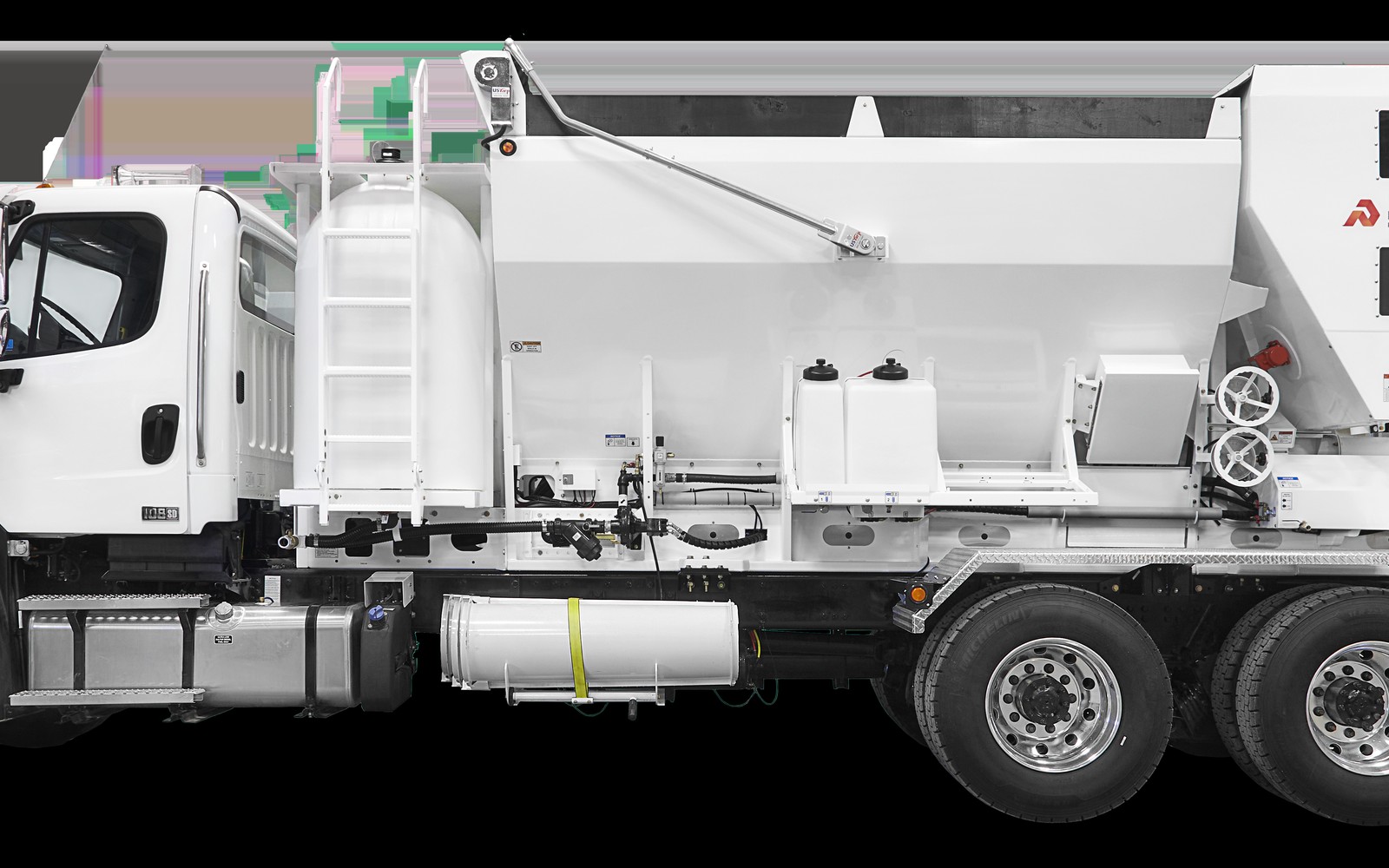
Grain bin pads, hog barn floors, feed lot aprons, silage bunker walls, dairy parlor slabs, and grain elevator foundations: agricultural concrete work generates enormous demand for concrete in locations that batch plants rarely serve efficiently. The nearest plant is often thirty or more miles from the farm. The delivery window is tight, the road is gravel, and the minimum load charge adds cost that the farmer or ag contractor absorbs on every small pour. A volumetric mixer changes that picture completely.
Agricultural and farm construction contractors who run volumetric equipment are not just more cost-efficient, they are more competitive. They can quote pours that their plant-dependent competitors cannot profitably bid. They control their own schedule across a spring build season when every day of weather is a day the farm needs concrete placed. And they produce mix at the meter, meaning each pour gets exactly what the structural requirement calls for without the variability of a plant truck that left the batch plant before the traffic delay.
We finance volumetric mixers for agricultural construction contractors. Our minimum is $50,000. Most production units suited for ag work run landing between $100k and $150k and above. We consider B/C credit, work with new and used equipment, and handle private-party purchases. Funding generally completes in about one to two weeks from a complete application.
The Concrete Demand in Agricultural Construction
Modern agricultural construction is heavily concrete-intensive. A grain bin installation on a 2,000-acre corn operation might involve multiple bin pads, a receiving pit structure, a truck receiving apron, bin sweep tunnels, and a leg boot pit, all within a few hundred feet of each other. Ordering plant concrete for each structure individually generates a parade of short-load fees and delivery charges. A volumetric mixer placed on the site for the duration of the installation batches each structure as the project progresses, at material cost plus operating expense, with no delivery fee for any of it.
Dairy and hog confinement building floors are another high-volume agricultural concrete application. A finishing floor for a 1,200-head hog barn can require fifty or more yards of specific mix, placed in sections over several days. Livestock facility floors often require antimicrobial admixtures or specific surface treatments that must be metered in at the point of batching. Volumetric equipment handles that mix-design specificity naturally; a plant truck cannot batch a custom admixture mid-sequence without a special order that adds days to the timeline.
Agricultural states like Iowa, Kansas, Nebraska, and the Dakotas have a dense network of construction contractors who service the farm economy. Those contractors in markets like Des Moines, IA or Fargo, ND operate in exactly the geography where plant access is thin and the case for volumetric ownership is strongest.
Choosing the Right Unit for Agricultural Work
Agricultural concrete work spans a wide range of pour sizes: from a single post base at a quarter yard to a dairy parlor floor approach ramp at sixty yards. The right volumetric unit for ag work is typically in the six- to ten-yard production range, large enough to batch efficiently on medium pours and small enough to maneuver on gravel farm lanes without needing a heavy chassis that cannot access the site.
A trailer-mounted volumetric mixer is a practical choice for agricultural contractors who want batching capability without the cost of a dedicated truck. The unit tows behind a pickup or work truck, requires a lower capital outlay than a self-propelled mixer, and parks on site for the duration of a multi-day bin installation or building floor placement. It is the entry point that many ag-focused contractors use to prove the volumetric model before committing to a larger unit.
Self-propelled units in the mid-range offer faster mobilization between job sites and better highway speed, which matters for contractors doing multiple farm jobs across a wide rural geography. A tandem-axle volumetric mixer on a commercial truck chassis handles gravel road conditions better than a tri-axle configuration and still carries adequate payload for the pours common in agricultural construction.
Financing Options for Agricultural Construction Contractors
Agricultural construction contractors often work in a seasonal business model: the spring and fall build seasons generate the majority of annual revenue, and winter cash flow can be lean. Equipment financing for this business pattern should account for that seasonality rather than loading heavy monthly payments into the slow months.
An equipment loan with a standard monthly payment is the most straightforward structure and the one most contractors default to. For operators with strong seasonal cash flow, that regularity is manageable. An equipment lease is an alternative that offers a lower monthly commitment, which some ag contractors prefer to maintain flexibility in the off-season.
For contractors considering their first volumetric unit and unsure whether the volume justifies a full production truck, starting with a used unit and our used equipment financing program is a sensible approach. A proven used trailer-mounted unit or a smaller truck-mounted mixer at a lower price point reduces the financial commitment while you build the customer base that justifies a larger unit later.
Section 179 financing is worth specific attention for agricultural contractors. The deduction can be substantial on a piece of equipment placed in service before year-end, and it reduces the effective acquisition cost materially in the purchase year. Your CPA can confirm the calculation for your specific situation.
Agricultural Contractors Who Should Own Volumetric
The operator profile that makes the most sense for volumetric financing in the agricultural market is a contractor who regularly performs concrete work on farm installations, does enough annual volume to absorb the payment, and works in a geography where plant deliveries add significant time and cost to every pour. If you are doing five or more substantial farm concrete pours per month in a rural market, the economics of volumetric ownership are almost certainly favorable.
Contractors who have been passing on small farm jobs because the minimum charge from the plant makes them unprofitable should pay particular attention. Volumetric batching opens that segment back up. A two-yard post barn base that is not worth a plant truck's delivery is a clean profitable pour when you are batching it from your own equipment at material cost.
Agricultural contractors with a relationship base that extends to irrigation infrastructure work, grain handling facilities, or rural commercial construction alongside the farm work have multiple revenue streams that all benefit from in-house volumetric capability. That breadth accelerates payback on the unit. Compare this with how rural and remote jobsite contractors across different sectors use volumetric batching to serve markets where plant access is the limiting factor in what they can bid.
Frequently Asked Questions
Agricultural and farm construction contractors ask us these questions most often.
Finance Your Agricultural Concrete Equipment Today
Apply now and most agricultural construction contractors complete the review in about one to two weeks. Compare loan options or start with a used equipment purchase. Spring build season comes fast, and a volumetric mixer lets you take every pour that the season brings.