
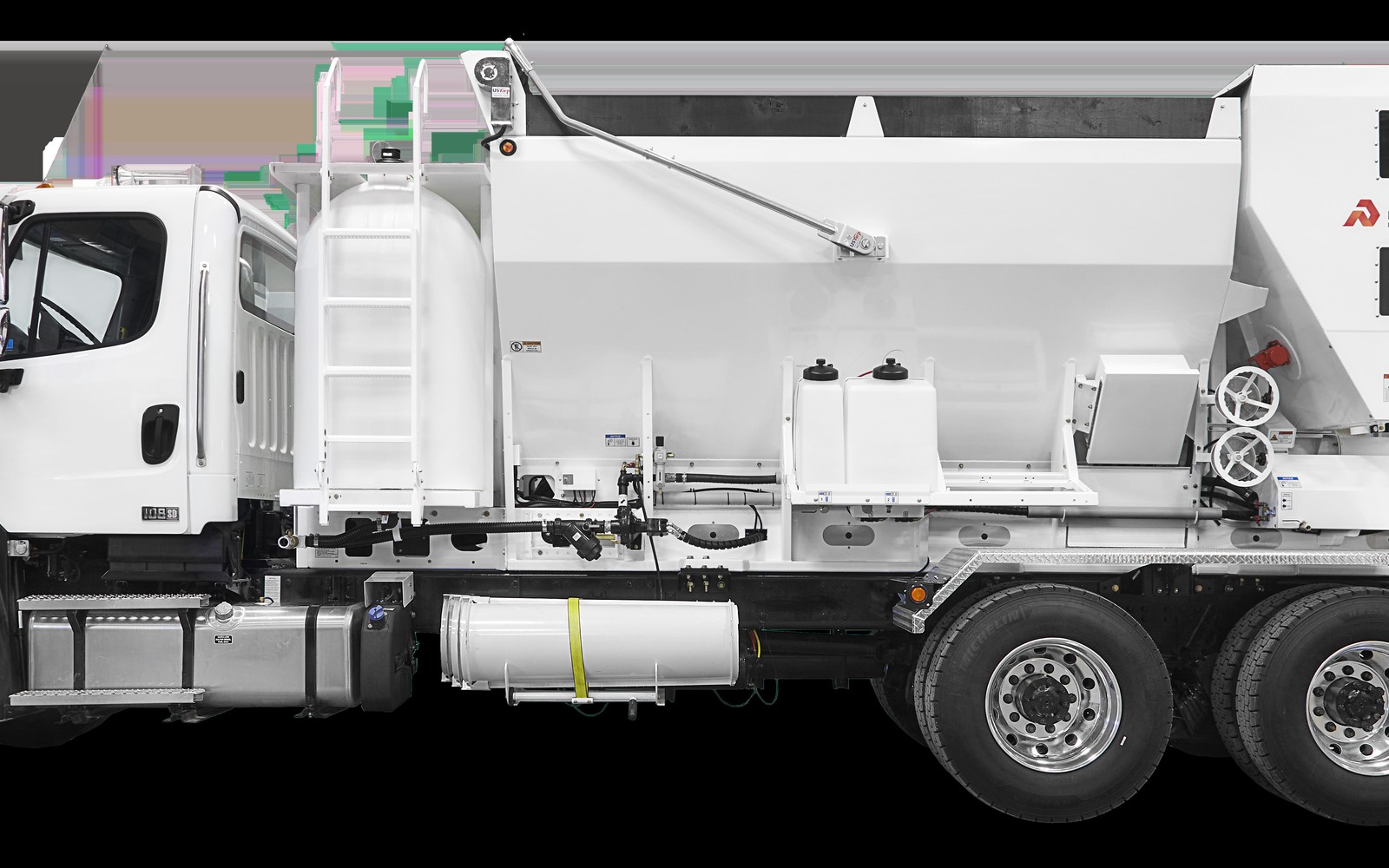
Your existing mixer is already producing concrete. The question is whether it is producing everything it could be. A pigment injection system turns a standard gray mix truck into a decorative concrete tool. A fiber dosing attachment opens up industrial floor slab and structural mix specs. A water meter upgrade tightens your mix consistency and cuts your variance on every yard you produce. Volumetric mixer attachments are the incremental investments that expand what your existing equipment earns, and the return on a well-chosen attachment is usually faster than the return on a full replacement truck.
We finance mixer attachments for concrete operators who want to add capability without replacing the whole unit. Minimum deal size for attachment financing is $50,000, which aligns with more significant system additions like integrated pigment injection setups or production-grade fiber dosing units. Application-only financing is available up to approximately $400,000 and most attachment deals fund in one to two weeks.
The Attachment Categories Worth Financing
Not every mixer accessory warrants its own financing line. A spare hose or a recalibrated meter is a maintenance expense. But several categories of attachments are substantial enough in cost and in revenue impact to justify an equipment loan or lease:
- Pigment injection systems: These liquid or dry colorant delivery systems range from basic metered pumps to fully integrated electronic dosing systems. A high-quality liquid pigment system can cost $15,000 to $40,000 installed and opens up the entire decorative concrete market. Related to the colored-concrete volumetric mixer segment, but as an upgrade to your existing unit rather than a full replacement.
- Fiber injection systems: Synthetic and steel fiber dosing attachments typically run $20,000 to $60,000 depending on fiber type, feed mechanism, and integration complexity. They tie directly to the fiber-reinforced concrete mixer market without requiring a new truck.
- Control system upgrades: Electronic control and display systems that improve metering precision, batching recordkeeping, and remote diagnostics. See the separate volumetric mixer control-system upgrade page for details.
- Extended aggregate hoppers: Additions that increase aggregate bin capacity without replacing the truck, effectively moving the unit toward the aggregate-bin mixer truck output class.
- Secondary cement compartments: Additional cement capacity for extended-run operations where the primary bin runs out before the pour is finished.
How Attachment Financing Is Structured
Attachment financing is structured as a loan against the installed attachment as collateral. The practical requirement is that the attachment be installed on a titled piece of equipment, which is the underlying mixer truck in most cases. The combined truck-plus-attachment is the collateral basis, and the loan covers the attachment purchase and installation cost.
Some lenders are reluctant to finance attachments separately because they are concerned about the collateral's standalone value if the attachment is removed from the host equipment. We know that installed attachments are not easily removed and remarketed separately. Our collateral assessment looks at the combined asset value, and we structure the attachment loan accordingly.
For borrowers who already have an outstanding loan on the host mixer, adding attachment financing creates a second position lien on the combined asset. We can often handle this, but the first lien holder's consent may be required. If you own the mixer free and clear, the attachment loan is in a clean first position. If you are still paying on the truck, let us know and we will figure out the best structure.
An equipment loan is the standard structure for attachment purchases. A working capital loan is an alternative for smaller attachment costs that fall below our equipment minimum, since working capital lines can fund smaller operational investments without the equipment-specific collateral structure.
Why Operators Are Adding Attachments Rather Than Replacing Trucks
New volumetric mixer prices have risen alongside chassis costs, which makes the cost of a full truck replacement substantially higher than it was a few years ago. Operators who have a solid mixer truck with a good engine and a functional batching system are increasingly choosing to upgrade the attachment systems rather than trade the whole unit for a new one. That decision makes financial sense: the incremental cost of a pigment system or a fiber injector is a fraction of a new truck, and it delivers most of the revenue benefit of the new specialty configuration.
The upgrade path also avoids the downtime associated with selling an existing unit and taking delivery on a new one. For operators with active contracts, that downtime has a real cost. Adding an attachment to an in-service truck typically takes days rather than months, and the truck can often remain in production during most of the installation period.
Operators in markets with high decorative concrete demand, like Orlando and Austin, are adding pigment systems to existing units at a rate that reflects how quickly those markets reward color-capable trucks with higher per-yard pricing. The math closes fast on those investments.
Attachment Financing Questions
Here are the questions that come up most often from operators considering attachment financing for their existing mixer.
Finance Your Mixer Attachment
If you have a quote for an attachment installation, or if you are still in the planning stage and want to know what kind of financing is available, reach out now. We can give you a clear picture of terms and timelines before you commit to the purchase. Many attachment financing deals are application-only, which means the process is faster than you might expect. Get the capability you want on the truck you already have.