
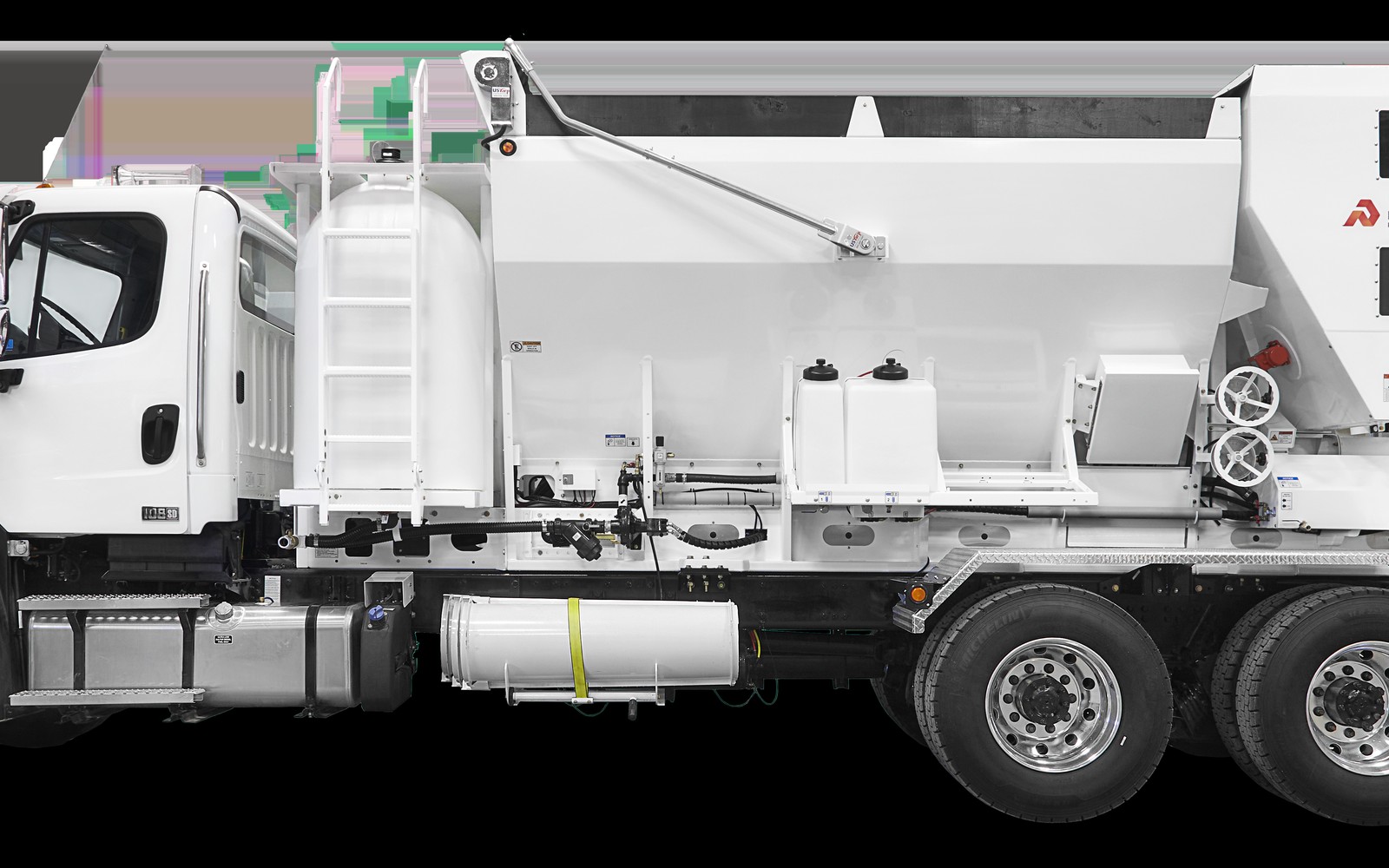
One mixing unit, multiple truck platforms. That is the operating logic behind a slip-mounted volumetric mixer. The mixing plant slides or hooks onto a carrier truck using a standardized coupling system, which means you can move the unit between chassis as your fleet and your work demand shift. When one truck goes in for service, the mixing unit transfers to another. When you add a second truck to the fleet, the mixing unit is already set up to run on it. The capital you protect is in the batching plant itself, not in a fixed marriage to a single truck body.
We finance slip-mounted volumetric mixers both as stand-alone batching unit purchases and as complete truck-plus-unit packages. Minimum transaction is $50,000. Application-only approval is available to approximately $400,000. Funding typically closes in one to two weeks.
How Slip Mounting Works
A slip-mounted volumetric mixer uses a subframe and locking mechanism that allows the mixing unit to be installed and removed from a truck chassis without specialized tooling. The coupling systems vary by manufacturer, but the general principle is the same: the mixing plant is not welded or permanently bolted to a single truck body.
This architecture has two primary operating advantages. First, planned chassis maintenance does not take the mixing unit out of production. The unit goes onto the spare truck while the primary truck is in the shop. Second, as the mixing unit ages past its useful life on one chassis generation, it can be transferred to a newer truck rather than requiring a complete new mixer purchase.
Slip-mounted units are most common in operations that run multiple trucks and want to maximize utilization of their mixing equipment investment. A concrete contractor with two or three trucks in rotation who runs the same mixing unit across the fleet based on schedule and availability gets more production hours from the mixing plant than an operator with three separate fixed-mount units.
Compare this configuration to a skid-mounted volumetric mixer, which is designed for semi-permanent site installation rather than regular truck transfers. The slip-mount is optimized for mobility and inter-fleet flexibility; the skid mount is optimized for site productivity at a fixed location.
Financing the Slip-Mounted Unit vs. the Full Truck Package
Lenders can structure slip-mounted volumetric mixer financing in a couple of distinct ways depending on what you are purchasing.
Mixing unit only. If you already own carrier trucks and are adding the mixing capability, the loan is secured by the mixing unit itself. The lender takes a security interest in the mixing plant. This is a straightforward equipment loan or lease on the batching hardware.
Complete package. If you are buying a truck and the mixing unit together, the loan can cover the full package. The truck title and the mixing unit both serve as collateral. This combined approach often produces better overall loan terms than financing the components separately.
Common structures include an equipment loan with fixed monthly payments and a clean title at payoff, or a TRAC lease for operators who want the truck to qualify as a vehicle lease for tax purposes.
For operators adding slip-mounted capacity alongside an existing volumetric fleet, an equipment refinancing of existing units may free up capital to fund the new unit without a new loan. We can evaluate the full fleet picture and suggest the most efficient structure.
Who Benefits From a Slip-Mounted Configuration
Slip-mounted volumetric mixers are not for everyone. The flexibility benefit is most valuable for operations in specific situations.
Multi-truck fleet operators. A single truck concrete business gains little from slip-mounting capability. But a two- or three-truck operation that wants to maximize mixing unit utilization and reduce downtime during scheduled maintenance gets real value from the interchangeable platform design.
Operators in markets with high truck maintenance demands. High-volume concrete operations that log heavy daily mileage on their carrier trucks need to plan around chassis maintenance cycles. A slip-mounted mixing unit keeps producing while a truck is off the road.
Businesses planning truck chassis upgrades. Rather than writing off the entire mixer when you replace an aging truck, a slip-mounted unit transfers to the new platform and extends the useful life of the mixing investment.
For contractors serving ready-mix concrete suppliers or operating as sub-suppliers to larger concrete operations, fleet uptime is a contractual obligation. A slip-mount configuration provides a built-in contingency plan for truck downtime.
Operators curious about related configurations should also review the truck-mounted volumetric mixer page to understand the standard fixed-mount alternative before committing to a slip-mount setup.
What the Approval Process Looks Like
Financing a slip-mounted volumetric mixer follows the same path as any commercial equipment loan.
- Credit application covering your business and personal credit profile
- Three months of business bank statements showing cash flow and revenue history
- Equipment details: make, model, year, condition, and price for the mixing unit and any associated truck
- Decision in 24-48 hours on most deals; funding in about one to two weeks
B and C credit operators are welcome. We work with our financing team who specialize in construction equipment and understand that contractor credit scores sometimes take hits during slow construction cycles without reflecting the underlying business quality. The bank statement cash flow story matters as much as the credit score in these situations.
Startups and new businesses can qualify through new-business startup financing structures, though these may require a stronger personal credit score and potentially a down payment to close the deal at competitive terms.
Finance Your Slip-Mounted Volumetric Mixer
One-page application gets the process moving. B/C credit considered. Mixing unit only or complete truck package both qualify. Expect funding in about one to two weeks.