
Credit problems do not define your ability to run a productive concrete business. A concrete contractor with a settled bankruptcy two years back and a strong current business model is a fundamentally different risk than a business that is struggling right now. The credit score is one data point; the equipment, the business cash flow, and the operator's knowledge of the work are the rest of the story. We specialize in finding paths forward for operators whose credit files are not clean but whose businesses are real and working.
Bad-credit equipment financing for volumetric mixers is available. The terms will reflect the credit situation honestly, which means a higher rate or a larger down payment compared to a prime credit deal. That is not a penalty; it is how risk-based pricing works. The question is whether the economics of the financing still support the margin you are building by batching on site rather than buying plant-delivered concrete. For most operators, even at sub-prime rates, the answer is yes. A mobile batch plant truck generating real margin on every yard it produces earns its keep even when the financing cost is elevated.
Credit Situations We Work With
Bad credit is not one thing. The spectrum is wide, and the right financing structure depends on where specifically the credit issue sits:
Low Score, No Serious Derogatory Marks
A score in the 500s to low 600s without a bankruptcy, active collections, or recent charge-offs is a workable situation. The issue is usually thin credit, late payments, or high utilization rather than a catastrophic event. Higher rates and a down payment requirement in the 20-30 percent range are likely. Strong collateral from a recognized manufacturer helps significantly. Operators financing a used volumetric mixer with clear title and a documented inspection can often find a lender in this credit tier.
Bankruptcy in History
A bankruptcy that has been discharged, with at least 12 months of clean credit history since discharge, opens meaningful options. The more time since the bankruptcy and the more consistent the payment history since discharge, the better. A Chapter 7 discharged 2 or more years ago is treated differently than one discharged 6 months ago. Lenders in this space understand that bankruptcy is often a one-time business or personal event rather than a pattern, and they evaluate the current situation accordingly.
Active Collections or Tax Liens
Active federal tax liens are the hardest obstacle in equipment financing and can block deals entirely with most lenders. State tax liens and older collections are more workable. If you have active federal liens, addressing those is typically required before moving forward. Talking to a tax professional about resolution options is the right first step before approaching lenders.
How Collateral Compensates for Credit Risk
The stronger the collateral, the more credit risk a lender can absorb. A well-documented, recently inspected volumetric mixer from a manufacturer with a liquid secondary market is genuinely strong collateral that changes the risk calculus for lenders who might otherwise pass on a sub-prime credit deal.
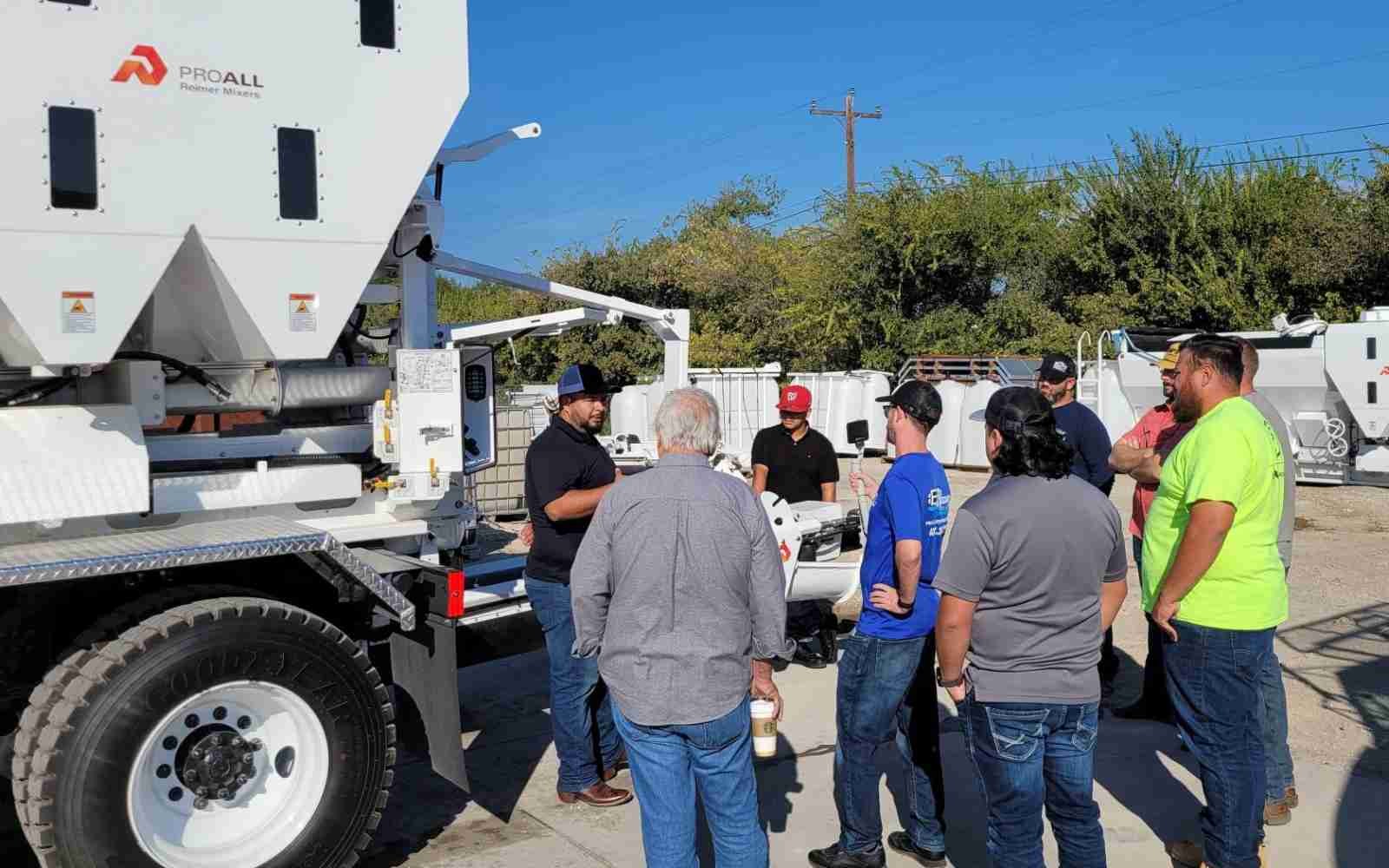
Manufacturers whose units hold value well in the secondary market include volumetric mixer manufacturer financing and ProAll, both of which have active dealer networks that buy and sell used units regularly. That liquidity matters to a lender because it means they have a realistic path to recover their money if a deal goes badly. When lenders can see a clear recovery path through the collateral, they take on credits they would otherwise decline.
For buyers with challenged credit, investing in a thorough inspection and presenting it as part of the financing package is one of the most effective ways to improve the deal. A fresh inspection report that says the machine is in solid operating condition directly reduces the lender's uncertainty about the collateral quality.
What Bad-Credit Mixer Financing Actually Costs
Rates on sub-prime equipment deals are higher than A-paper rates. The spread between prime and sub-prime varies with market conditions and individual circumstances, but it is meaningful. An operator with prime credit might finance a mixer at a rate that makes the monthly payment a small percentage of the machine's daily yield. An operator at the sub-prime tier will pay more per month, but the mixer is still producing margin on every batch.
Run your break-even calculation before you decide whether the financing cost is acceptable. If the machine generates $X in additional margin per month by eliminating plant purchases, and the monthly financing payment is $Y, the question is whether X minus Y is a worthwhile spread for your business. For most volumetric mixer operators, that spread is positive even at elevated rates, which is why operators in difficult credit situations still pursue these machines aggressively.
Down payments on bad-credit deals typically run 25 to 40 percent. That down payment reduces the lender's exposure and is often what makes the deal possible at all. If the down payment requirement is the barrier, see whether you can structure a Sale-Leaseback on another piece of equipment you own to generate the down payment funds.
For a structured comparison of what different credit tiers look like in terms of available programs, our B/C credit equipment financing page covers the mid-tier between prime and deep sub-prime.
Getting a Bad-Credit Deal Moving
Sub-prime equipment deals do not always move as fast as prime deals because more underwriting scrutiny is involved. That said, specialty lenders in this space often have faster internal processes than a generalist bank, because they have built their underwriting around exactly these credit situations. Two to three weeks is a realistic timeline from application to funded for a well-documented sub-prime transaction.
The things that slow down bad-credit deals: incomplete documentation, unclear ownership history on the machine, unexplained large deposits or withdrawals in bank statements, and any outstanding legal judgments that were not disclosed upfront. Come in with full transparency about the credit situation. Lenders who specialize in this space are not surprised by the history; they are evaluating how the situation has resolved and what the current picture looks like. Operators in growing markets like Atlanta, GA or Charlotte, NC have active deal flow to work with even when dealing with specialized lenders.
Building Toward Better Terms Over Time
A sub-prime equipment deal is not a permanent state. It is a starting point. An operator who closes a bad-credit mixer deal and makes every payment on time for 18 to 24 months has materially improved their credit profile. The trade lines that report consistently are building the payment history that lenders reward. By the time that loan is two years old, a refinance into a better rate structure may be available, or the next machine purchase may qualify for standard terms.
The path from bad credit to good credit in the equipment finance context is straightforward: borrow responsibly, pay on time, and let time do the work. A single-axle volumetric mixer financed at a high sub-prime rate in year one can become the anchor of a more favorable credit profile in year three, when the operator refinances into better terms and uses the payment reduction to fund a second machine or improved working capital position.
Operators in markets with active construction like Knoxville, TN or Spokane, WA who are willing to start at sub-prime terms and manage the machine well often find that the business grows faster than the credit timeline, and by the time they need a second or third machine, their credit file tells a story that A-paper lenders want to hear. The first deal is the hardest. Make it count.
Tell Us Your Situation and We Will Tell You What Is Possible
We do not judge the credit history; we look at where you are now and what the deal looks like today. Start an application and be straightforward about the credit picture. We will come back with honest options and terms, not a runaround.